

WINK Ballpark (Himeji Ballpark)
- Japan
- Public Spaces
- Sports
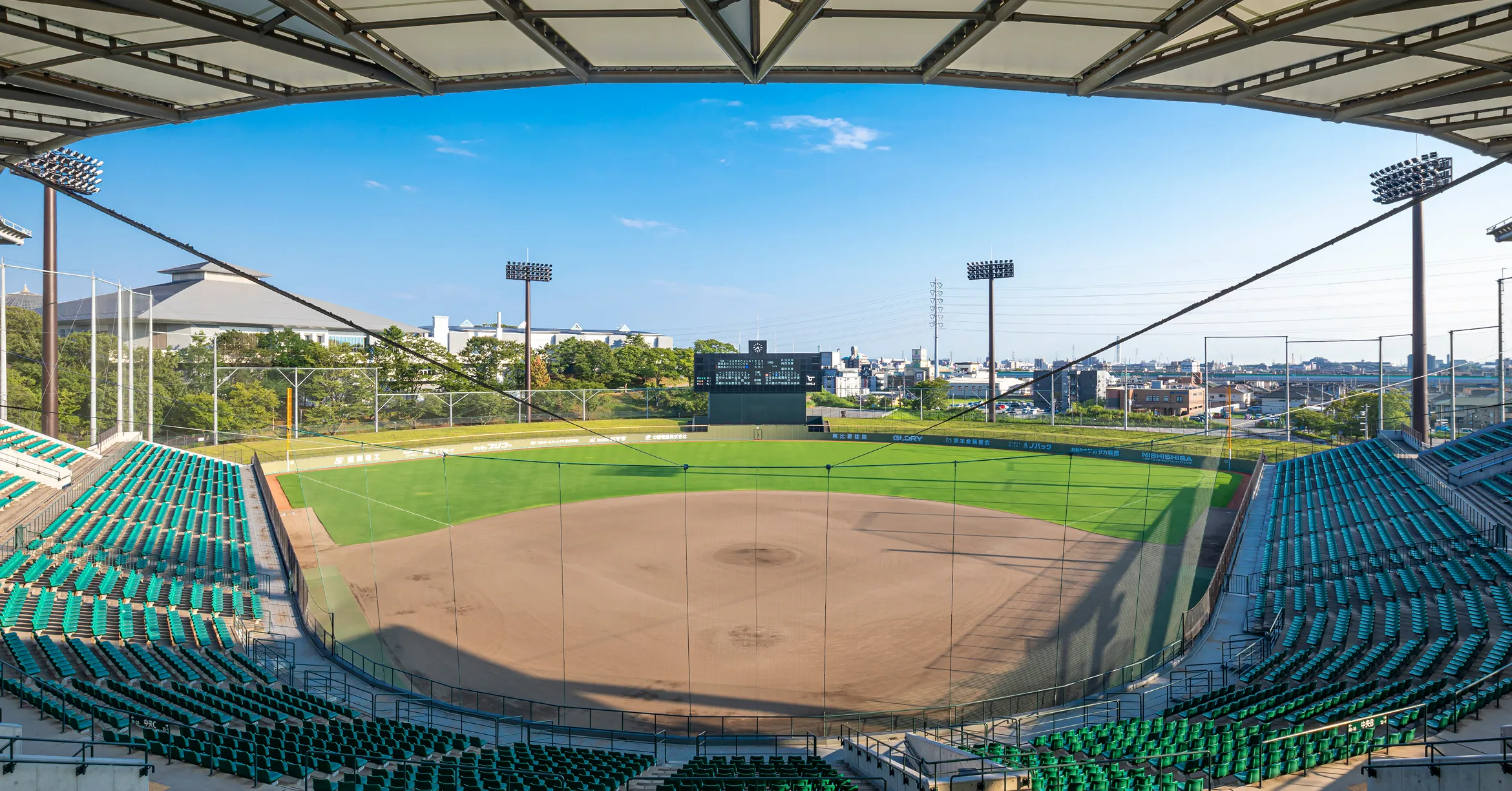
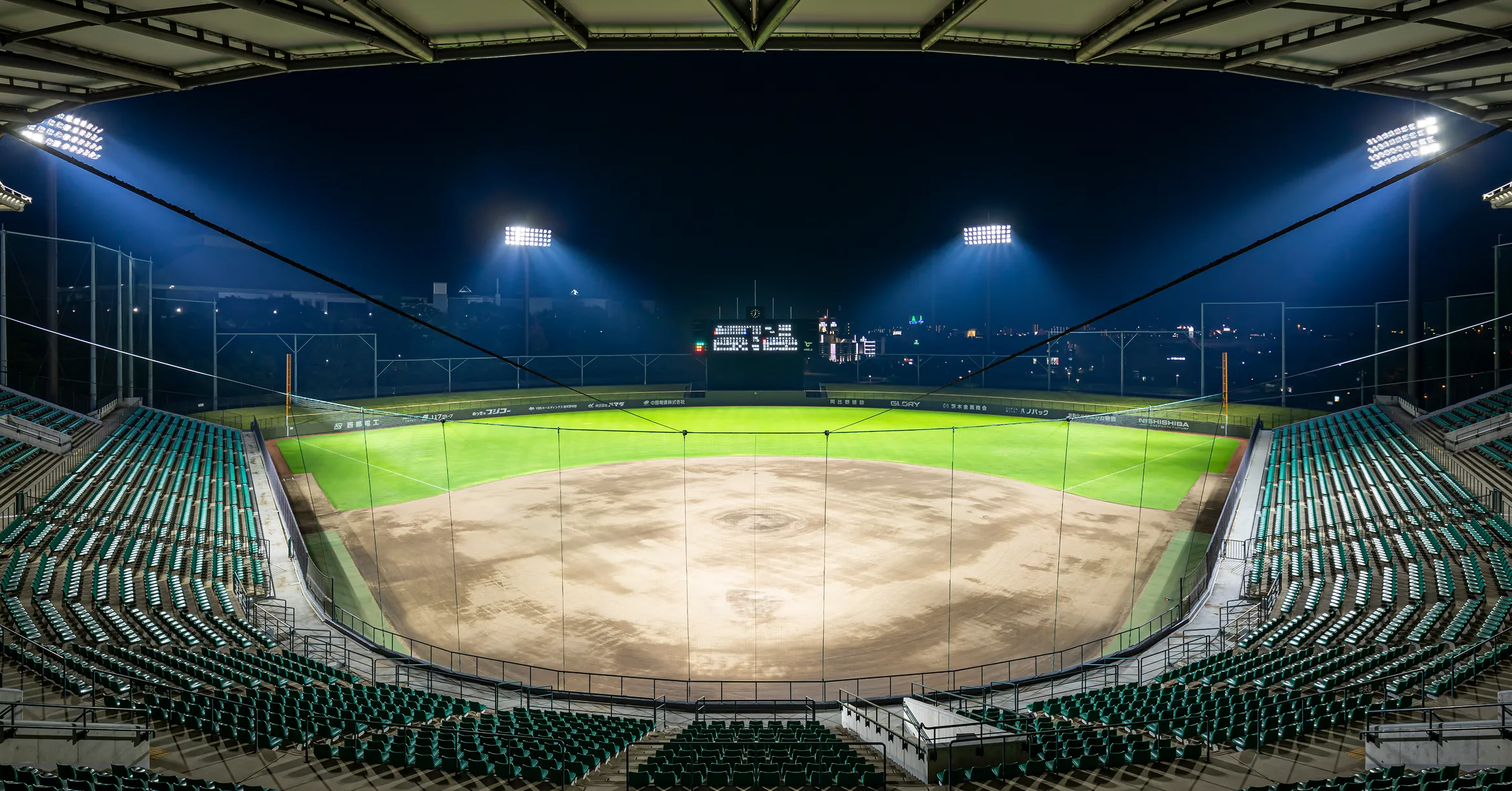
Transforming the baseball stadium into a dramatic space while taking into account the light illuminating the players and leaking outside
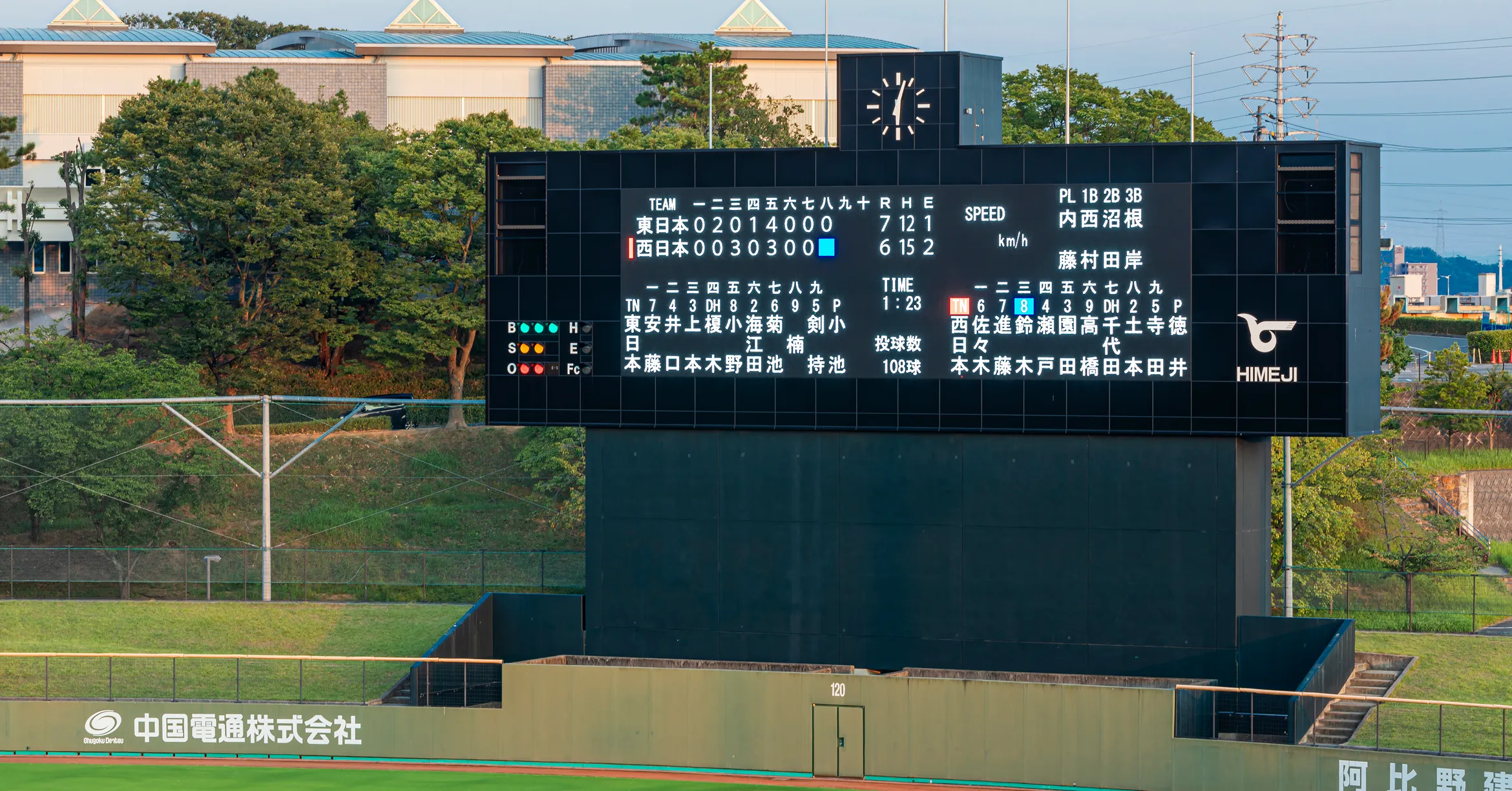
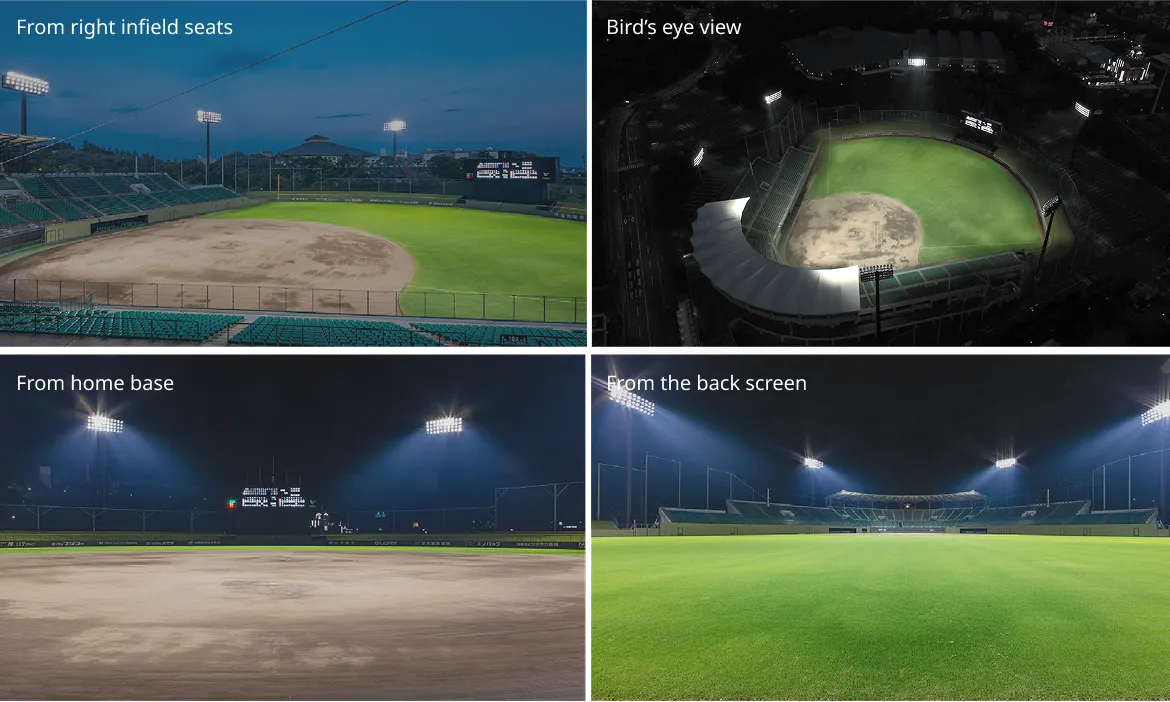
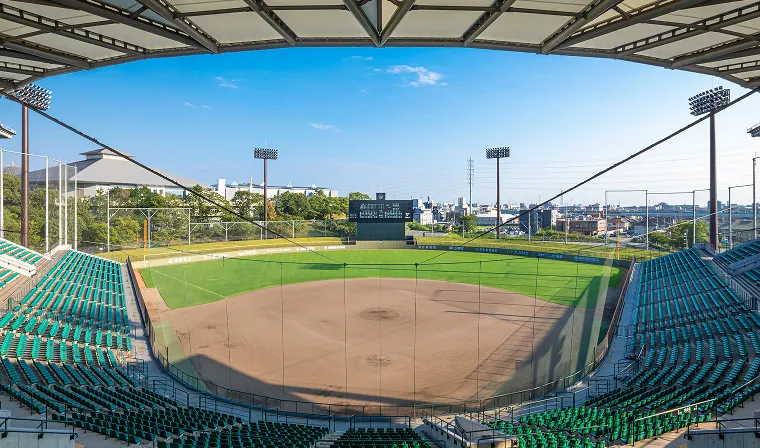
WINK Ballpark is a baseball stadium in Hyogo Prefecture owned by Himeji City. The stadium has been popular among locals since its opening in 1959. However, as the surrounding environment and user needs have evolved, greater versatility in its use has become necessary. In response, night game equipment has been installed, and the scoreboard has been switched to full-color LED lighting, positioning the stadium as a multifunctional event space for the entire region.
Baseball ground
As a stadium that supports Himeji’s sports culture, it has been equipped with versatile lighting facilities, making it suitable for a wide range of events
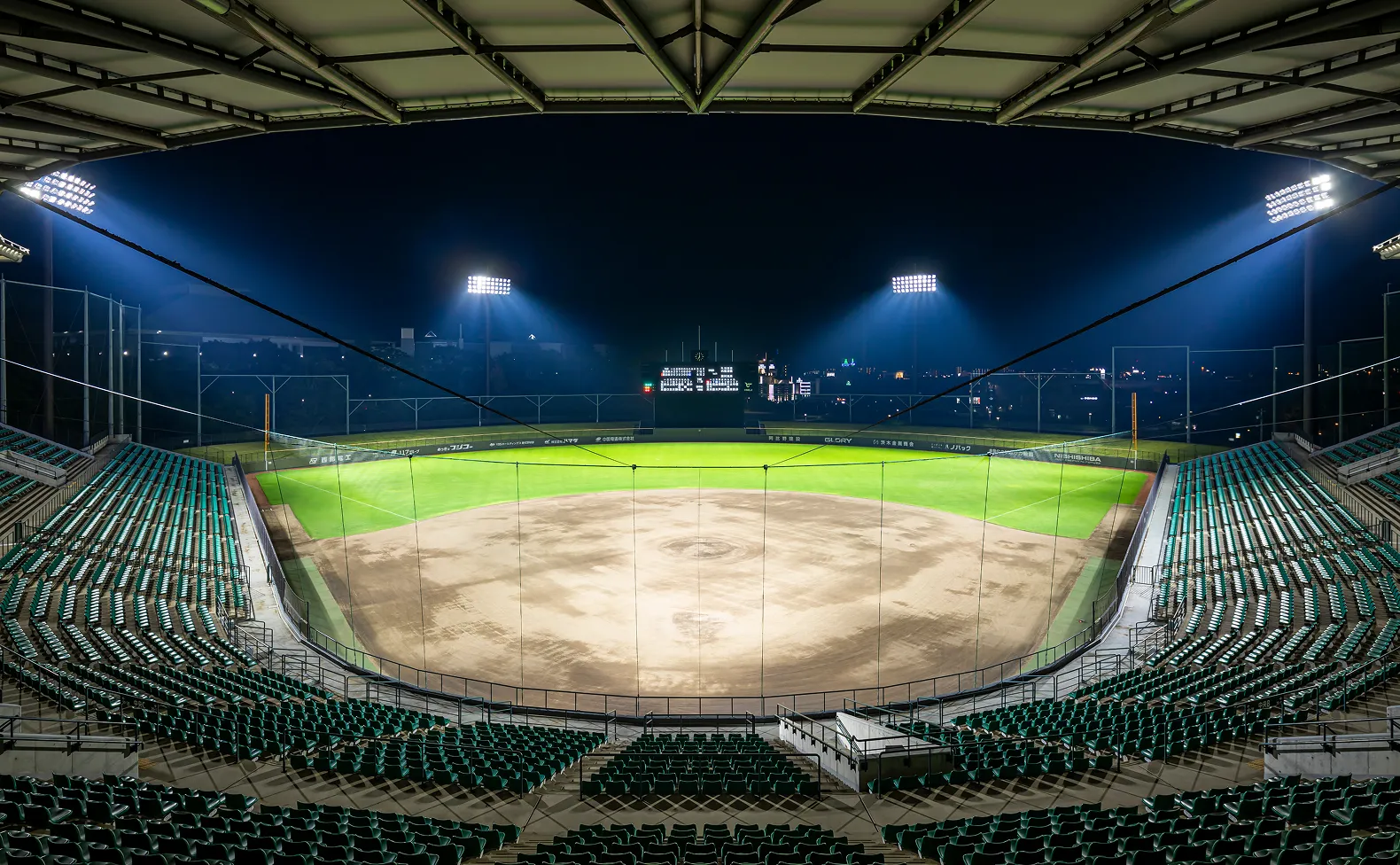
In terms of night game equipment, six floodlight poles with 232 lights were erected, ensuring illuminance that meets the standard of Nippon Professional Baseball. These lights are linked to the giant screen used as the scoreboard, enabling lighting effects to reflect the flow of the game. In addition to high school baseball and amateur baseball league tournaments, it is hoped that the stadium will be utilized as a venue for public viewings and concerts, taking full advantage of the giant screen.
By creating a stadium with both high illuminance and color rendition, a level of illuminance is achieved that enables TV broadcasting of Nippon Professional Baseball games
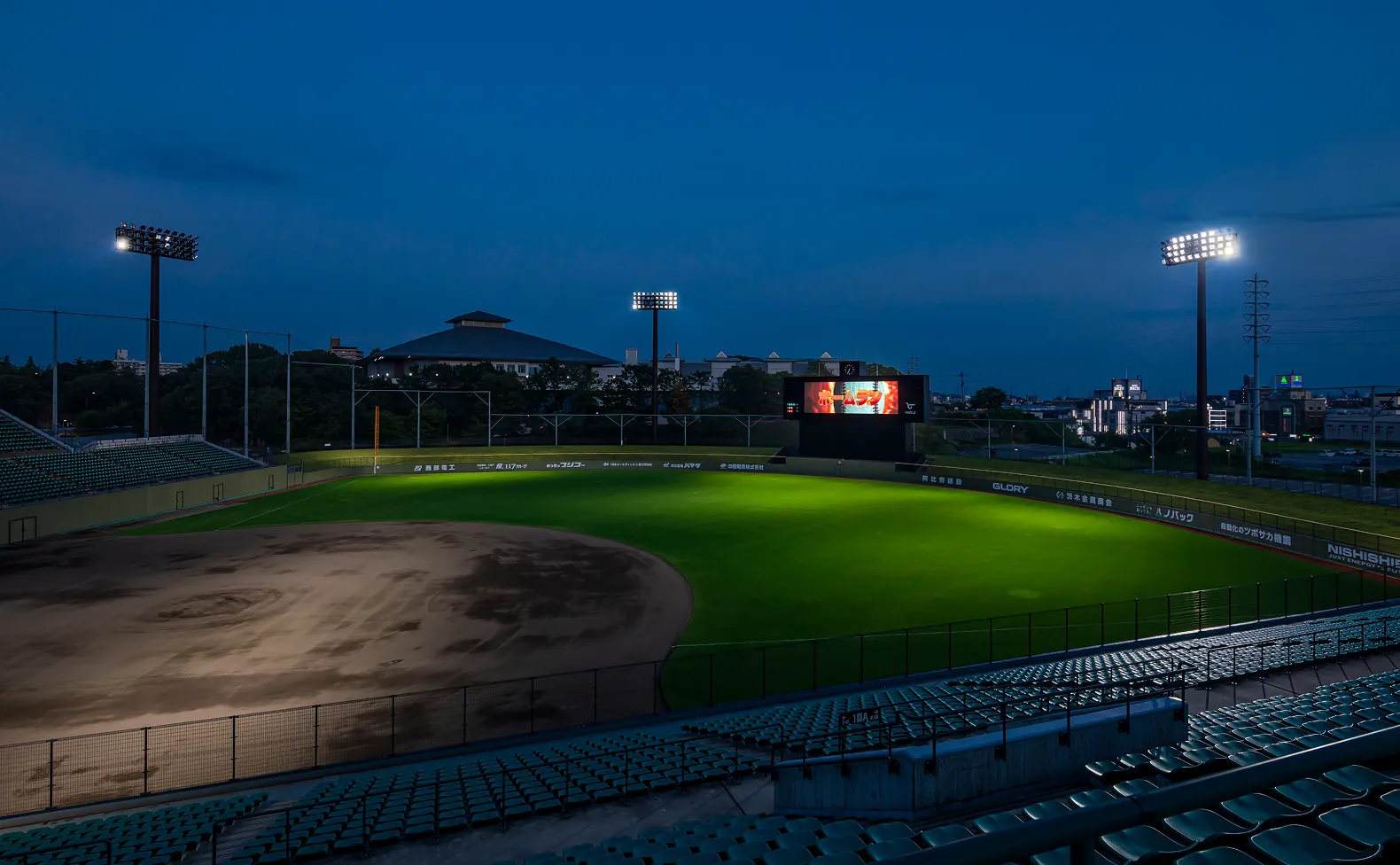
The newly installed LED floodlights provide both color rendition and vertical plane illuminance that meet the standards for TV broadcasting in Japan, creating a space that enables both players and spectators to become engrossed in the game. When fully lit, consistent illuminance of 2,000 lx in the infield and 1,500 lx in the outfield is ensured. While leaving appropriate spatial illuminance in order to increase ball visibility, anti-glare measures have been implemented so that players and nearby residents are not subjected to glare. Lighting effects can also be produced using DMX controls and continuous dimming from 0% to 100% is possible, allowing for dramatic lighting adjustments throughout the game to match the flow of play.
Lighting design standards achieved in this project
| Lights-on mode | Lighting range | Required standard values for lighting design | ||
|---|---|---|---|---|
| Illuminance value | Uniformity ratio of illumination (minimum/average) | Glare rating (GR) | ||
| Nippon Professional Baseball mode | Between batteries | Average of 2,500 lx or more | ー | 50 or less |
| Infield | Average of 2,000 lx or more | 0.7 or more | ||
| Outfield | Average of 1,500 lx or more | 0.5 or more | ||
| Light leakage to specific areas |
Maximum of 1 lx or less | ー | ー | |
| Official sporting event mode | Infield | Average of 1,000 lx or more | 0.7 or more | 50 or less |
| Outfield | Average of 750 lx or more | 0.5 or more | ||
| General sporting event mode | Infield | Average of 750 lx or more | 0.6 or more | 50 or less |
| Outfield | Average of 500 lx or more | 0.5 or more | ||
| Recreation mode | Infield | Average of 500 lx or more | 0.5 or more | 50 or less |
| Outfield | Average of 300 lx or more | 0.3 or more | ||
| Twilight mode | Infield | Average of 300 lx or more | 0.5 or more | 50 or less |
| Outfield | Average of 200 lx or more | 0.3 or more | ||
| Infield training mode | Infield | Average of 500 lx or more | 0.5 or more | 50 or less |
| Outfield | ー | ー | ||
Horizontal Illuminance Distribution Simulation Diagram (Nippon Professional Baseball mode)
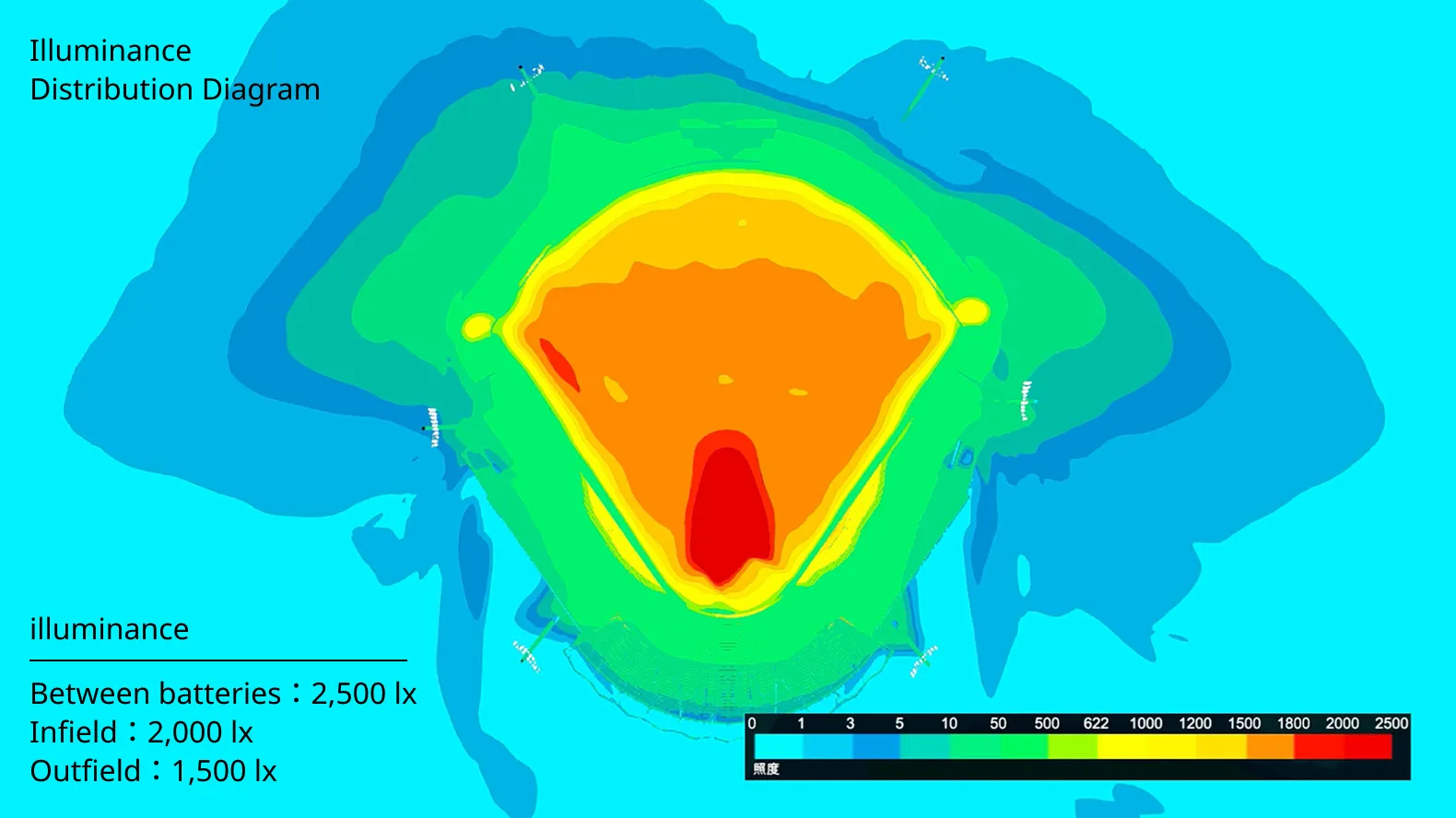
High-precision simulations ensuring illuminance is up to Nippon Professional Baseball specifications
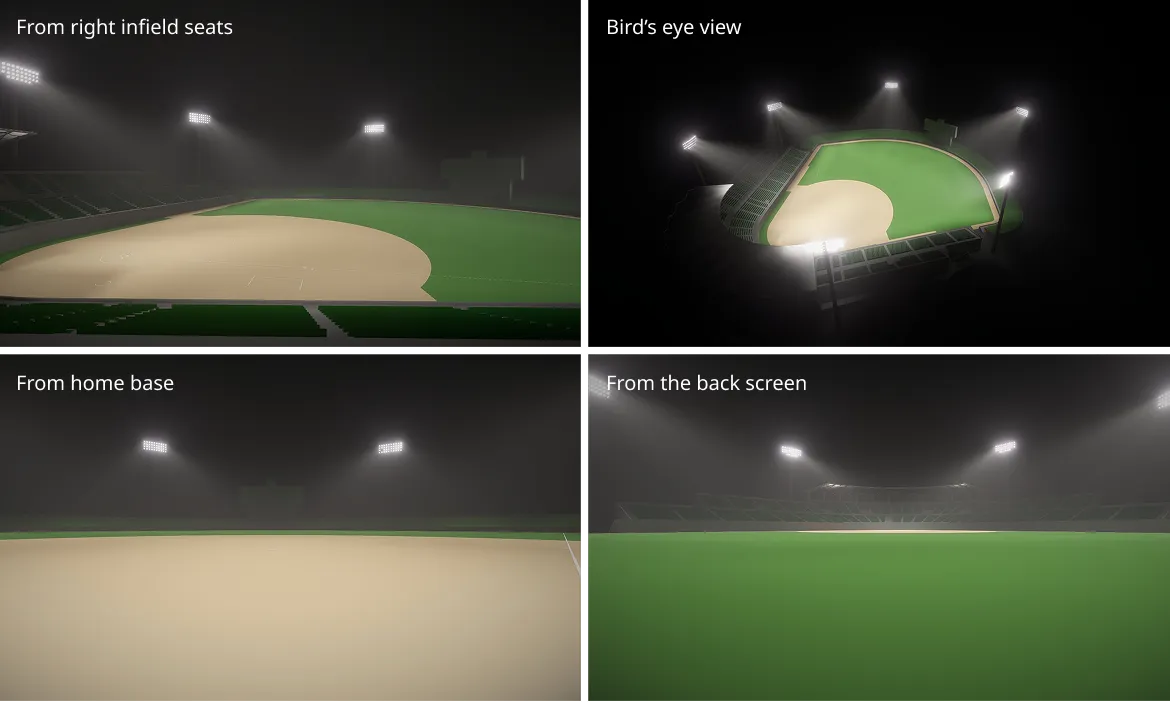
CG images using real-time lighting simulations were generated for the proposal. Simulations were performed to ascertain glare-cutting efficacy when all stadium lights are on, as well as the amount of light leaking outside the stadium. On the left is a simulated image generated using real-time lighting simulations, and on the right is an actual photograph. We were able to realize a luminous environment equivalent to the simulation and carry out high-precision simulations.
Confirming fly-ball visibility using real CG
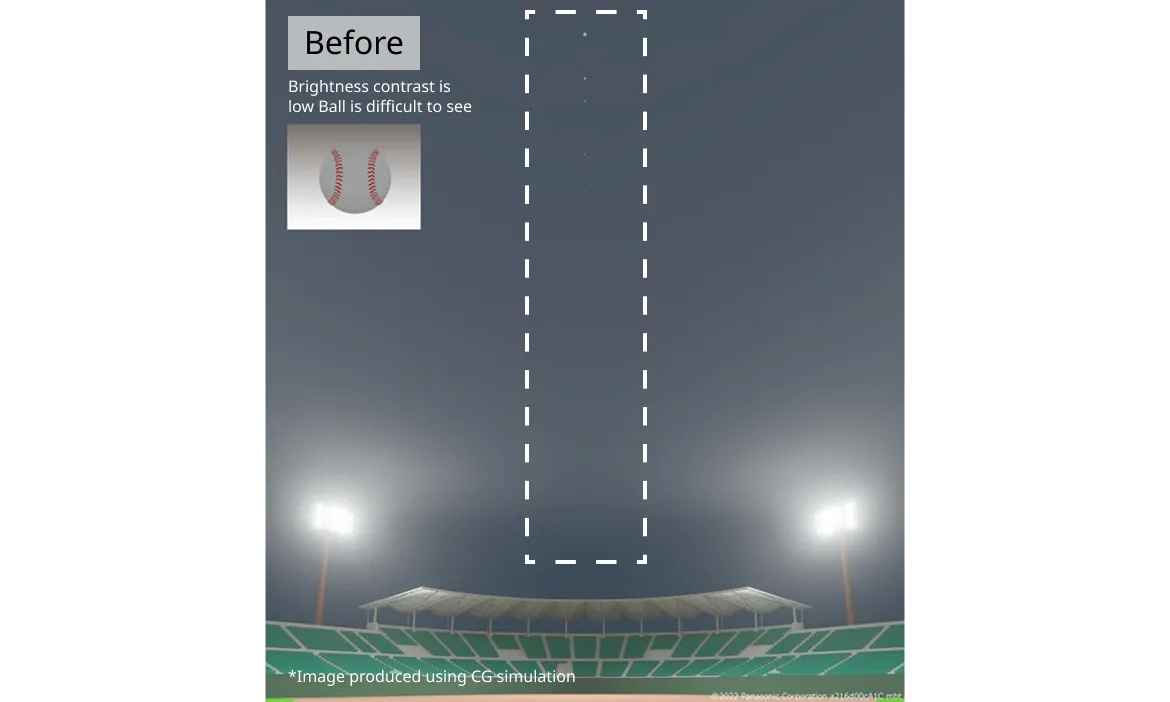
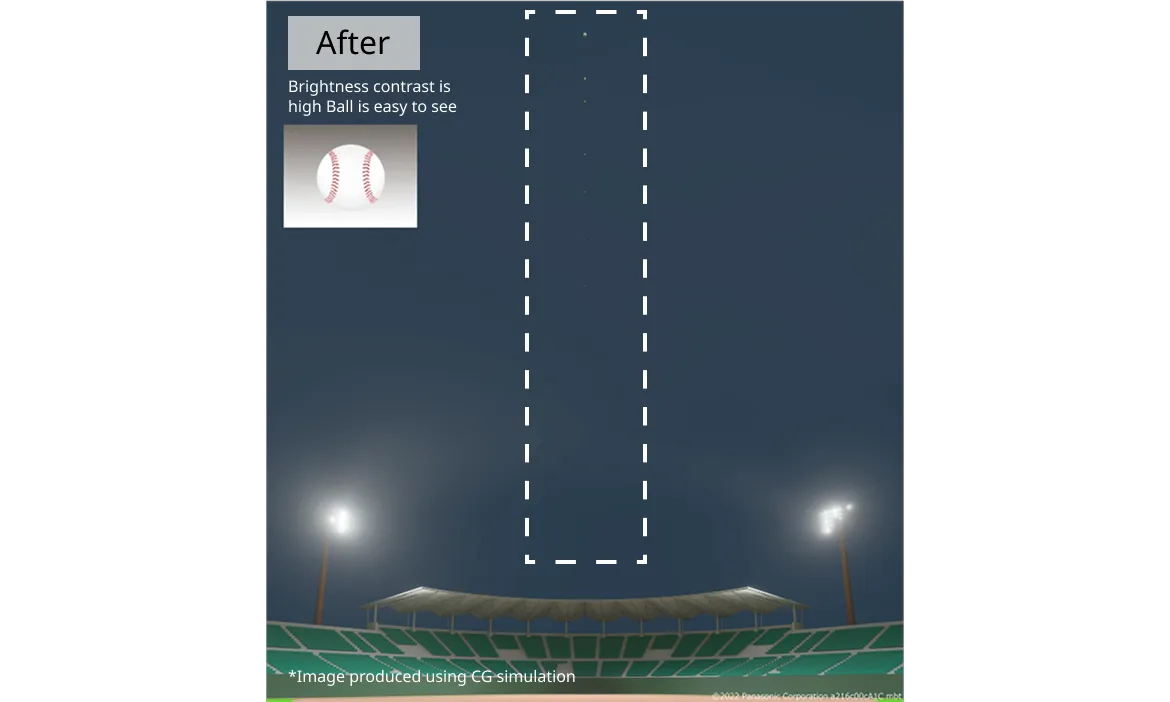
The use of high-cutoff lighting equipment to suppress light leakage completely eliminated upward light emanating from the top of the lighting towers, potentially making high-rising fly balls invisible. We therefore carried out simulations using real CG to enable even more precise evaluations of the lighting environment. The simulation results showed that spatial light scattering has a significant effect, indicating that a high cutoff lighting environment produces greater contrast (brightness contrast) between the fly ball and background, thereby making the fly ball more visible.
Environmentally friendly insect control equipment contributes to ecosystem preservation by avoiding insect extermination
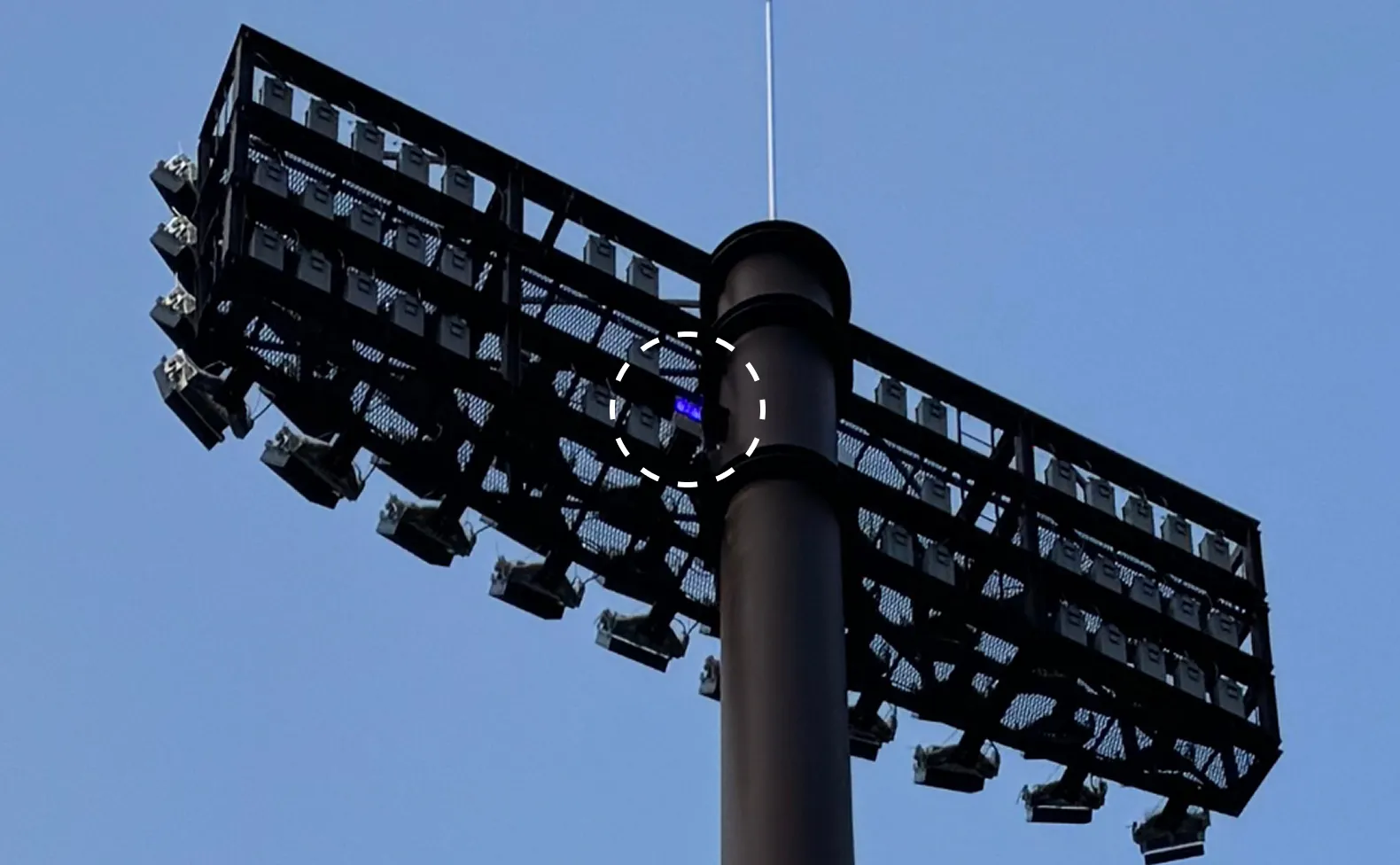
Inherent to nighttime outfield lighting is the problem of insects, and products that contribute to biodiversity conservation from the standpoint of SDGs have been adopted in order to address this problem. Unlike conventional electrical bug zappers, these LED insect traps attract insects with ultraviolet/blue LED and then hold them, thereby reducing insect damage without killing the insects, allowing them to be released back into the natural environment. This not only contributes to ecosystem preservation, but also eliminates the need to clean up the bodies of dead insects. Furthermore, because these LED insect traps do not use high-voltage current like electrical bug zappers, there is no buzzing noise during operation, enabling a balance between controlling insects and ensuring a quieter environment for the surrounding area.
Light pollution measures
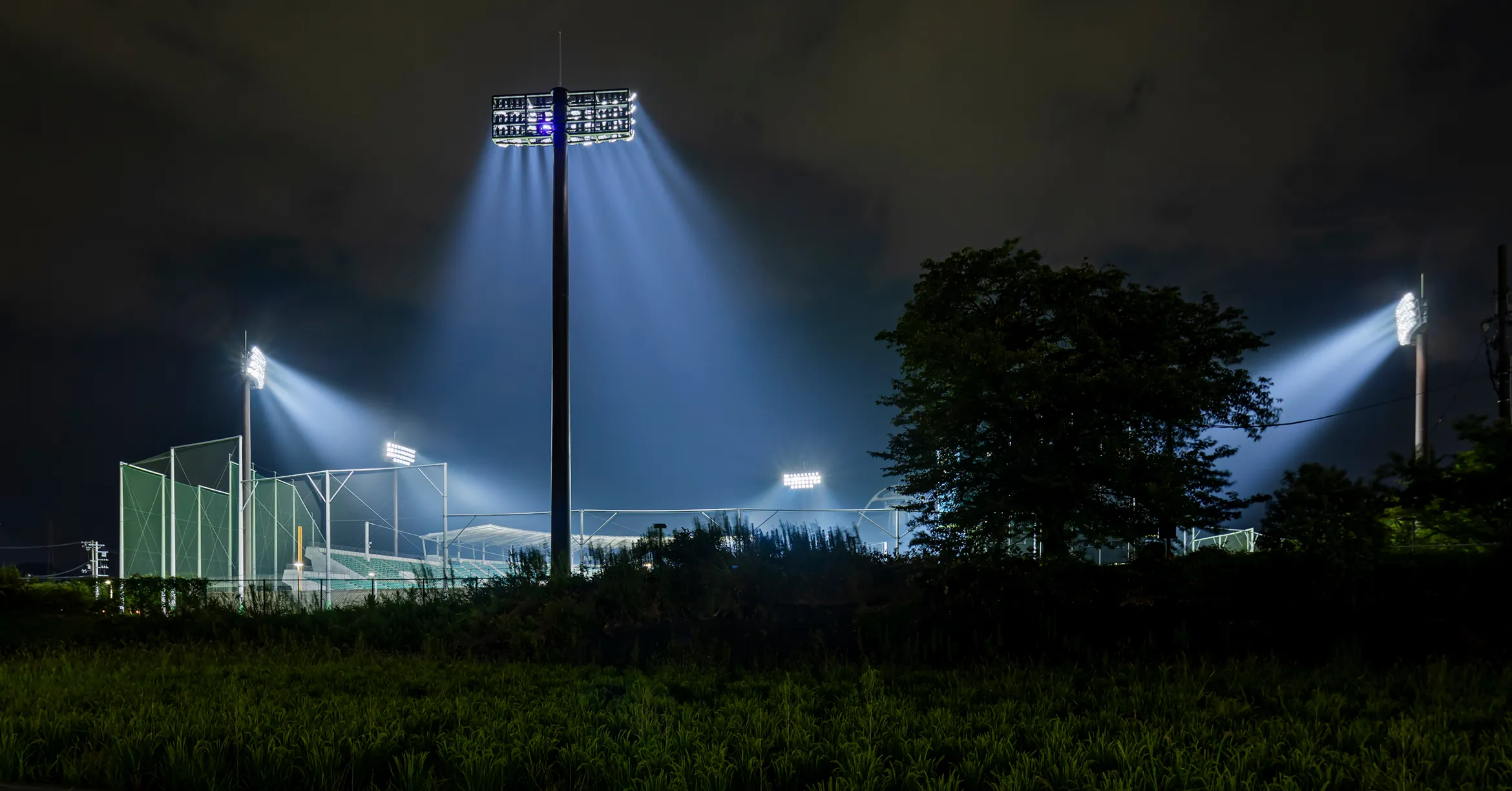
As a baseball stadium designed to invigorate the local area, measures have been taken to mitigate light pollution and ensure harmony with the surrounding neighborhood.
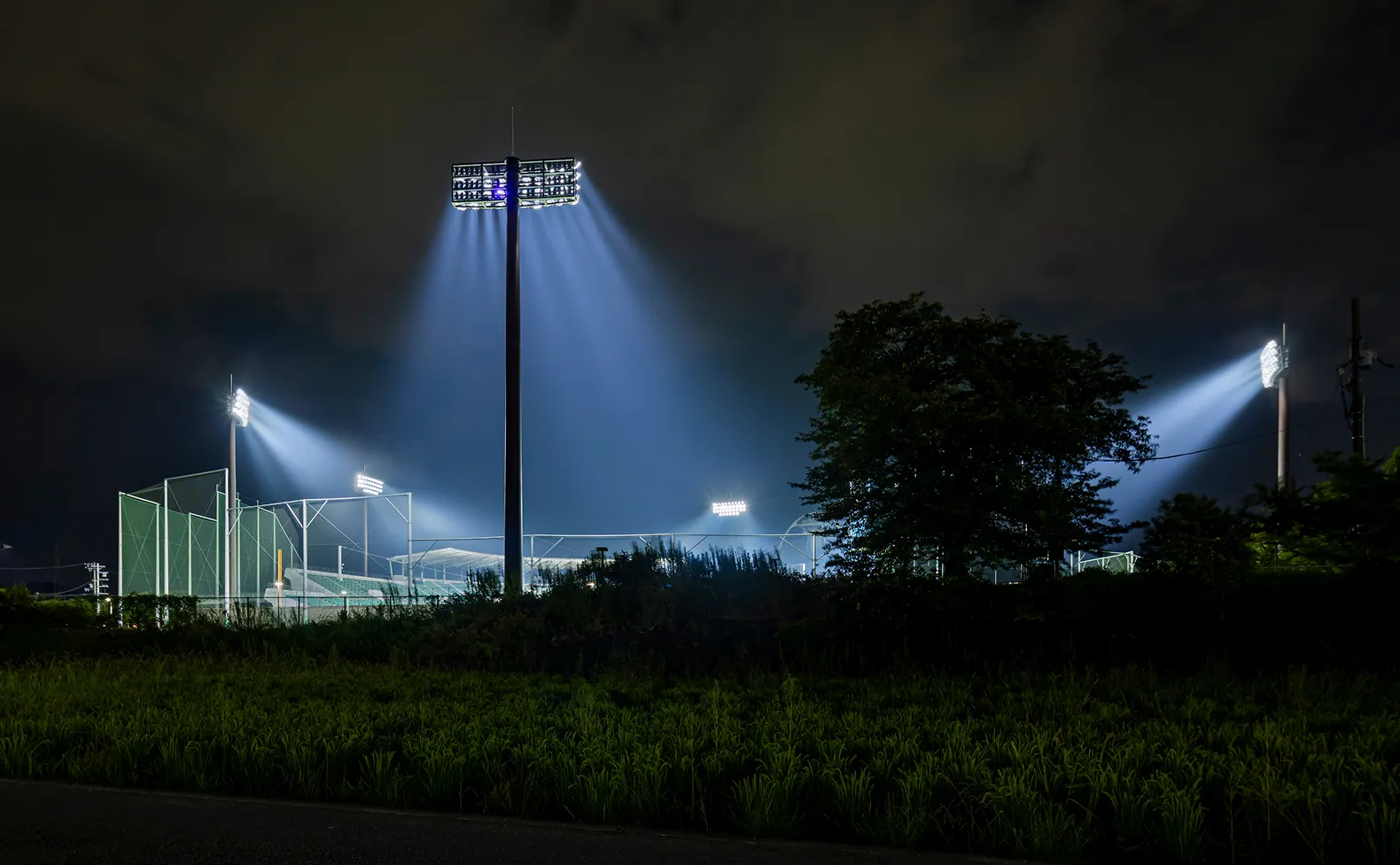
Although it was necessary to ensure a level of illuminance that would facilitate Nippon Professional Baseball events, it was also necessary to take light pollution into consideration because there are medical facilities and crop fields in the surrounding neighborhood. Accordingly, light distribution controls were implemented to ensure a maximum illuminance of 1 lx or less for light leaking outside the stadium within a specific area with lights shining brightly only inside the stadium. Inside the stadium, consideration is given to players’ performance, creating a visual environment in which uncomfortable glare is reduced.
The stadium is equipped with Panasonic's cutting-edge floodlights, showcasing their proprietary technology to deliver optimal performance even during night games.
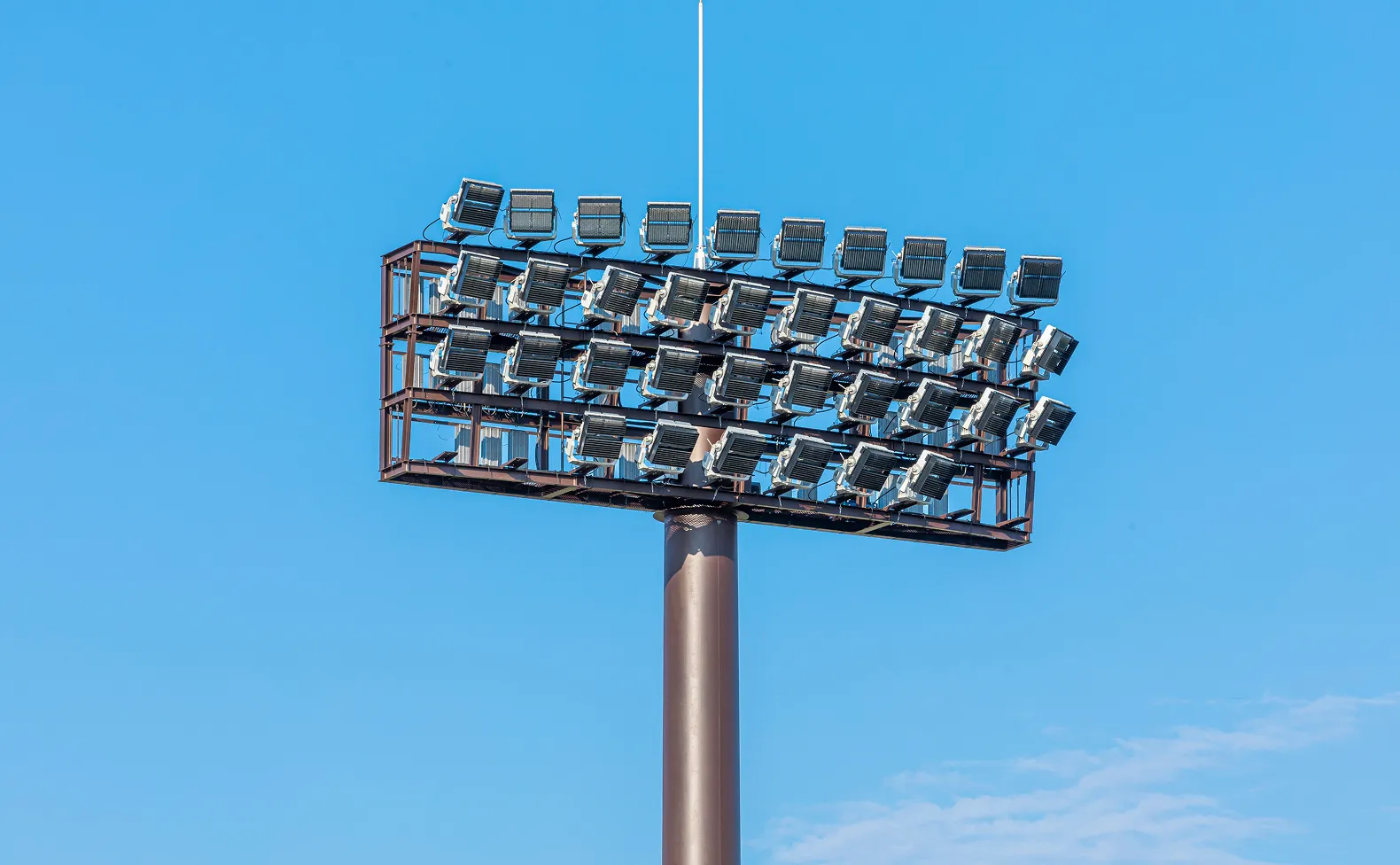
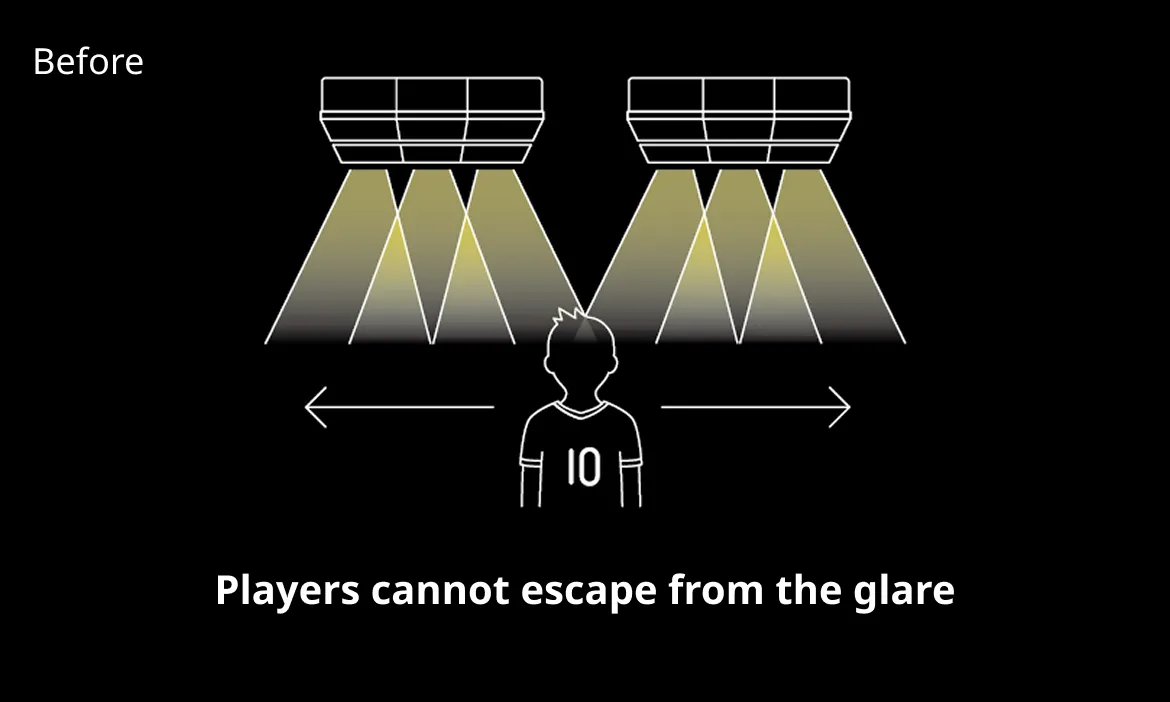
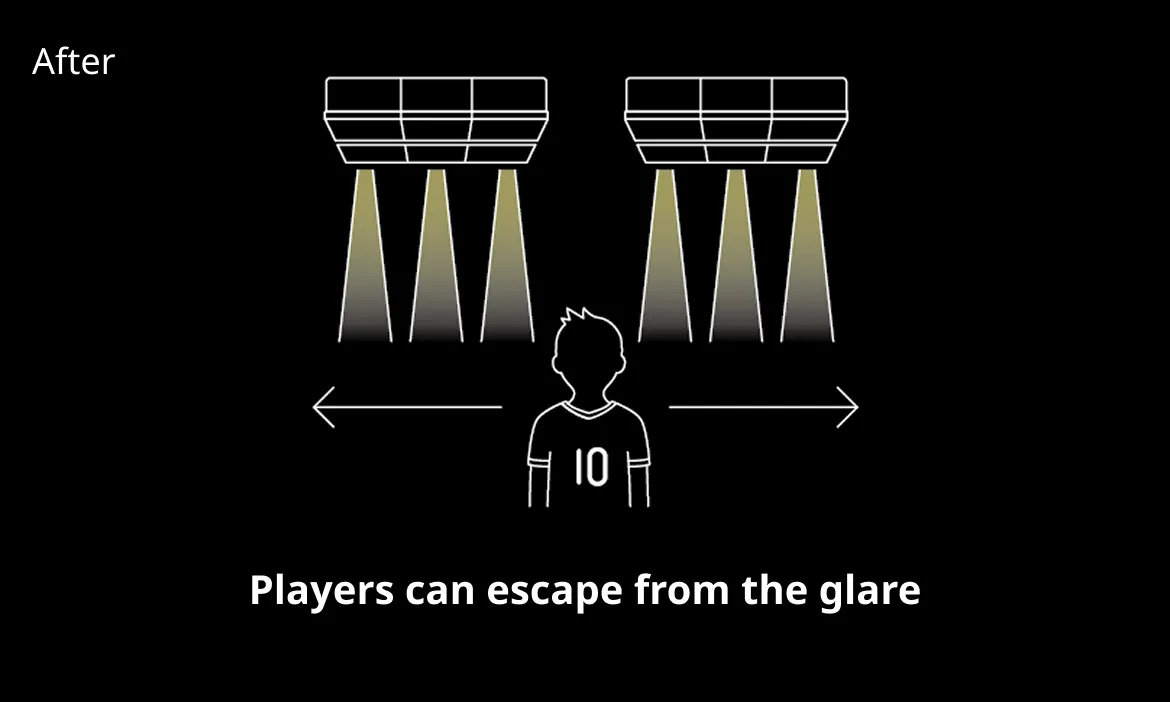
In order to reduce the glare experienced when looking directly at a lighting tower, it was necessary to prevent clusters of high-intensity light sources. Using our original light distribution technology, Panasonic has realized narrow-angle light distribution LED floodlights. In addition, all of the WINK Ballpark’s lighting equipment have been installed with cut louvers, reducing unnecessary overlap of glare sources by further narrowing the light distribution angle and thereby reducing the glare experienced when looking directly at a lighting tower. A comfortable visual environment that reduces the impact of lighting on sporting events has been created with baseball players being able to play inside the stadium without being affected by glare, even during night games.
WINK Ballpark (Himeji Ballpark)
- Location
- Iida, Himeji City, Hyogo Prefecture
- Owner
- Himeji City, Tourism and Economic Affairs Bureau, Sports Promotion Office
- Design
- Futagami Architectural Design Office Co., Ltd.
- Construction
- Hamada Co., Ltd.
- Electrical Work
- Kitayama Kosho Co., Ltd.
- Completed
- June, 2024

