

Hiroshima City Museum of Contemporary Art
- Japan
- Public Spaces
- Museums / Libraries
Creating optimal exhibition spaces by recovering and expanding functions while maintaining the original design
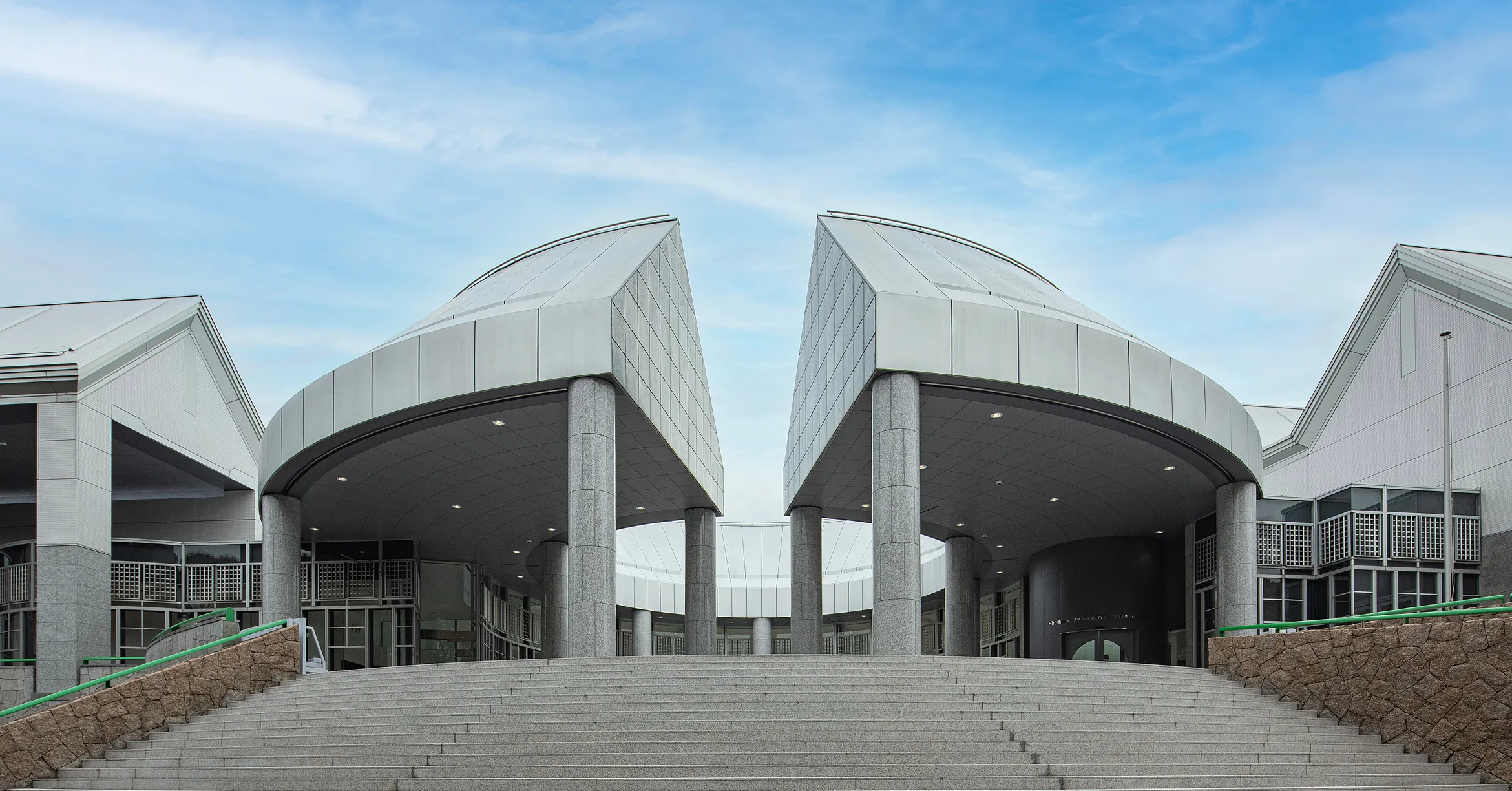
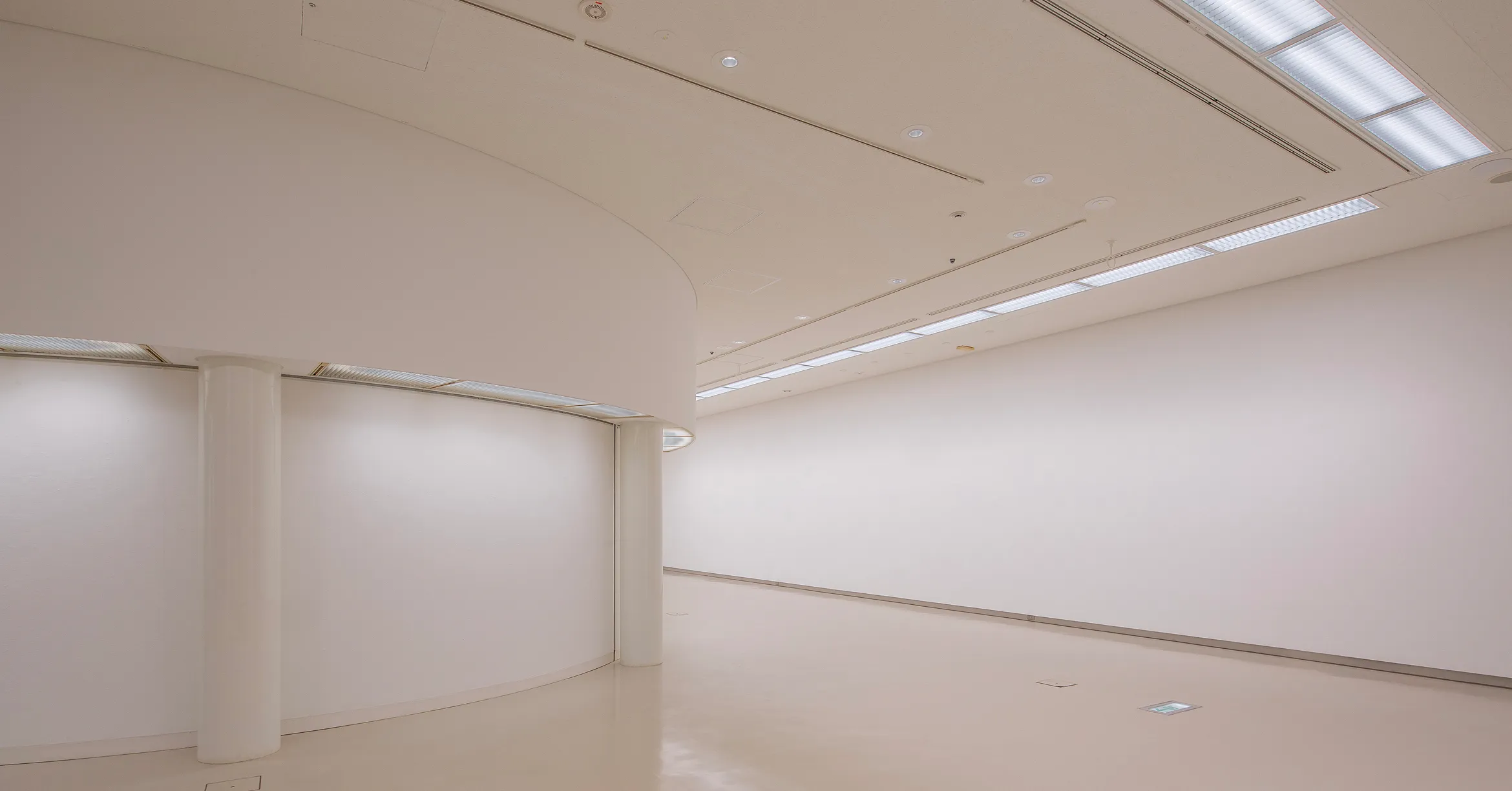
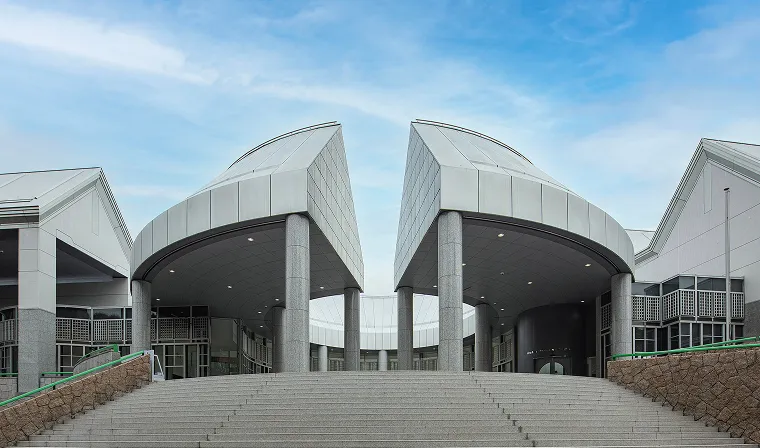
As Japan’s first public art museum specializing in contemporary art, the Hiroshima City Museum of Contemporary Art initially opened in 1989 and reopened after undergoing renovations in March 2023. The functional recovery of areas that had deteriorated over time and the functional expansion that added the functions required for art museums of the future were carried out, which transformed the building into an art museum starting afresh while maintaining the original design of the architect Kisho Kurokawa. Under the lighting plan, custom-made fixtures with functions that only LED could provide were designed, and care was taken to change the original design as little as possible by executing thorough surveys and experiments on the existing lighting system. A lighting environment capable of supporting diversifying exhibition spaces was realized.
First Floor
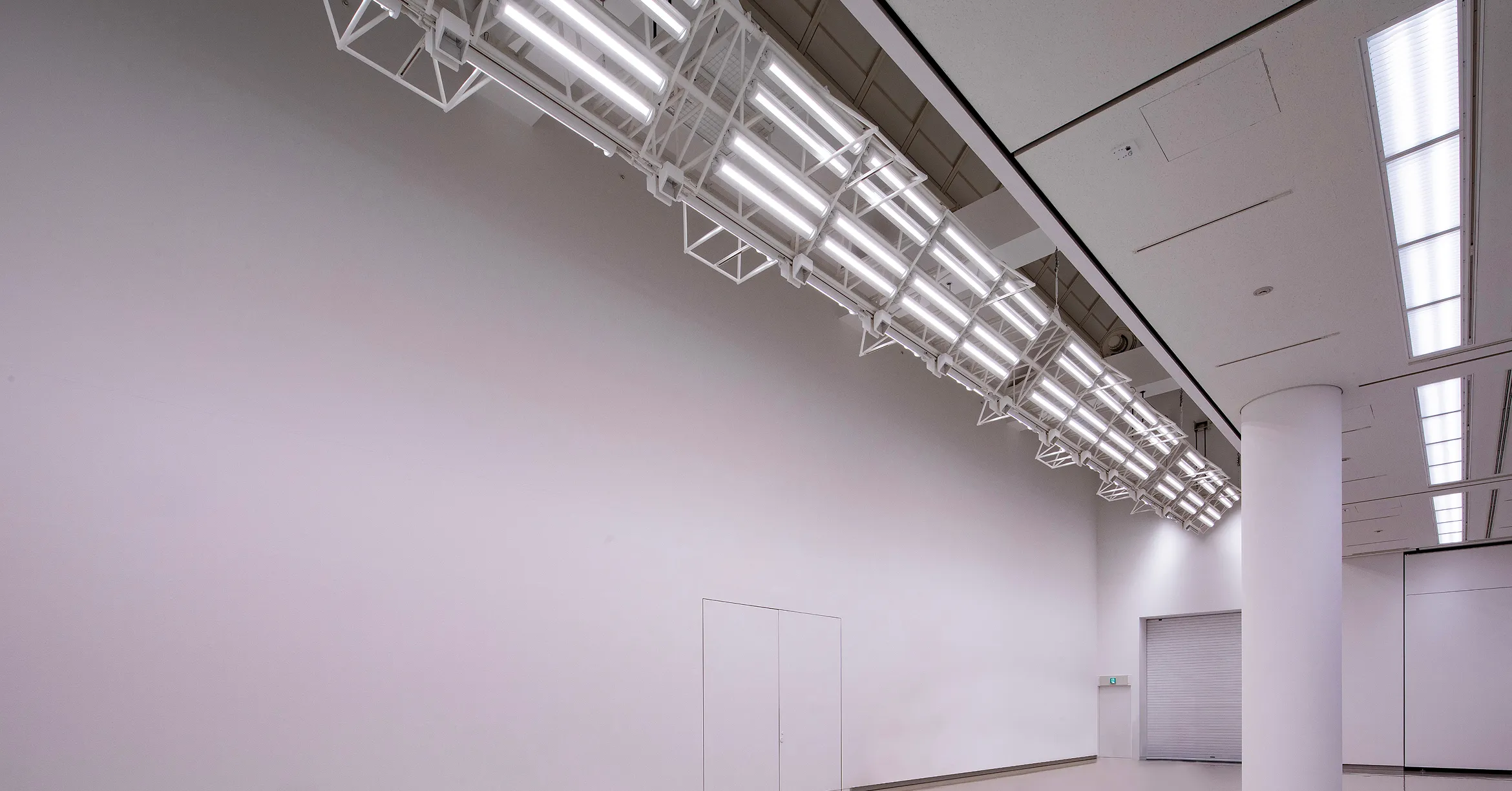
Exhibition Room B-1: The lighting adjustment function was improved while remaining faithful to the existing design, which created a beautiful lighting environment with its original optical design.
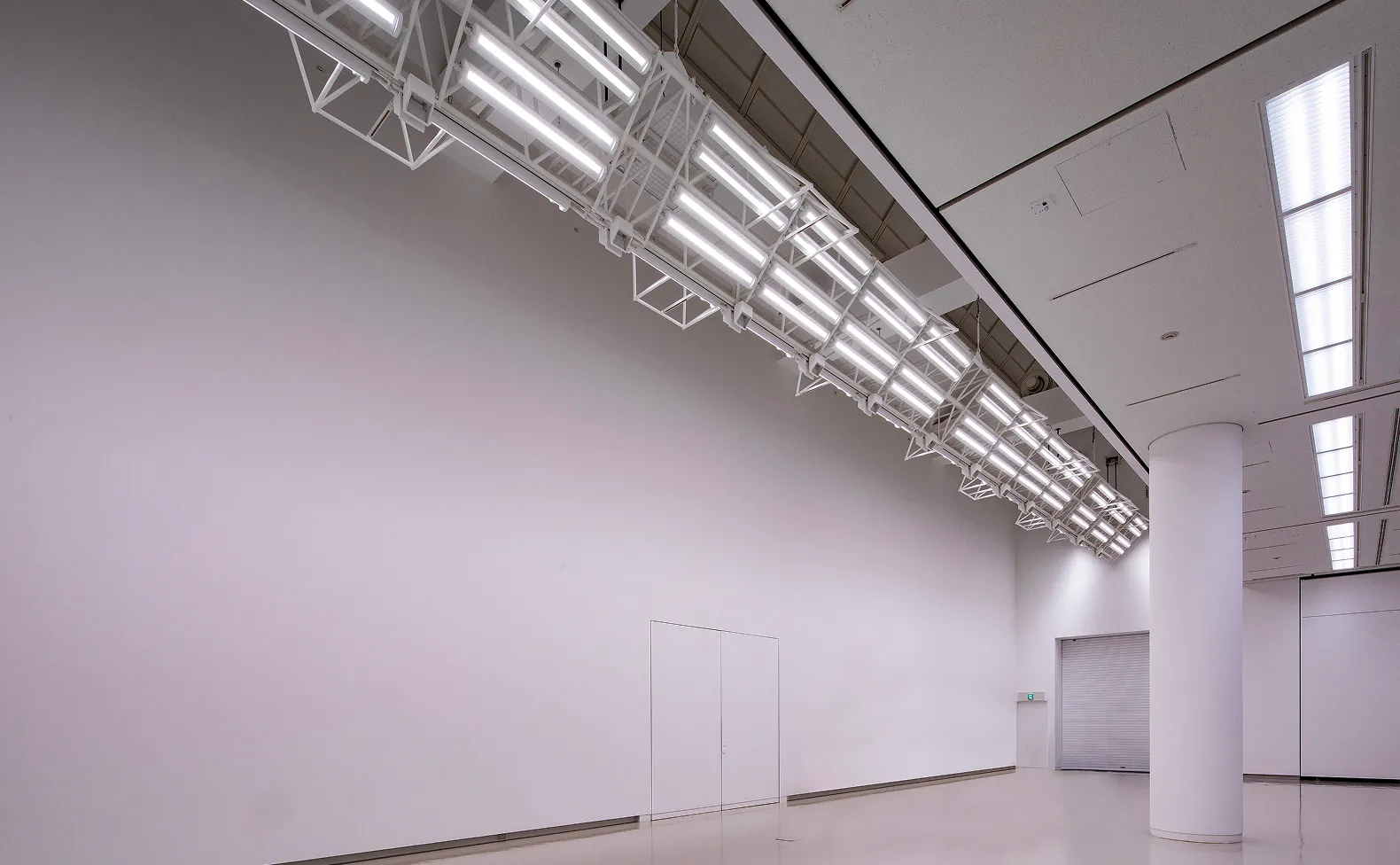
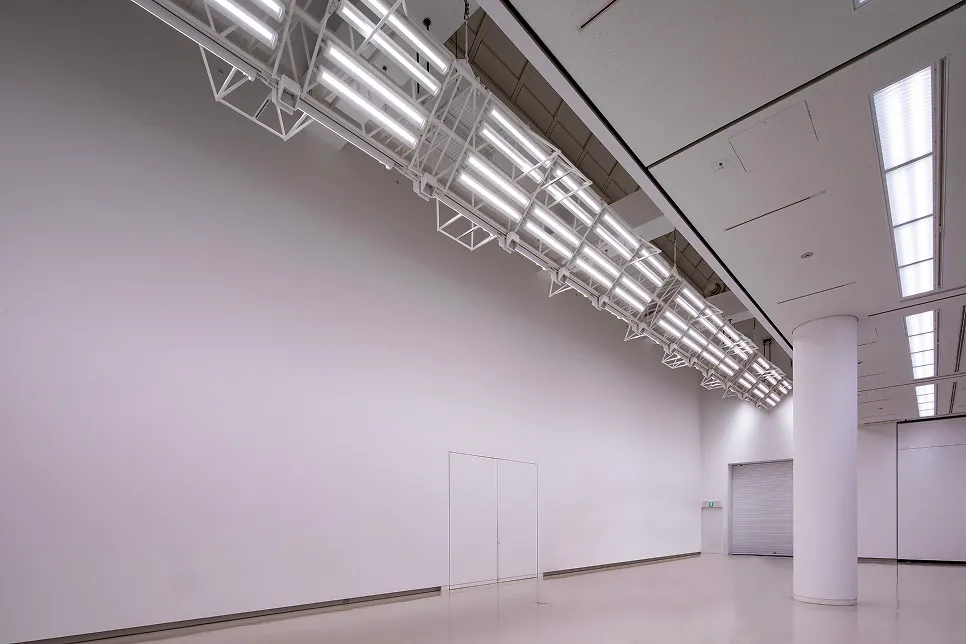
Located on the first floor, Exhibition Room B-1 comprises a space with two ceiling surfaces of differing heights. The truss-type lighting fixtures affixed to the higher side of the ceiling are responsible for distributing light to the wall washers and floor. In addition, the space can be divided into two though the use of partitions, which then allow its use for a variety of exhibitions.
Rotating truss-type lighting facilitates a variety of exhibition formats
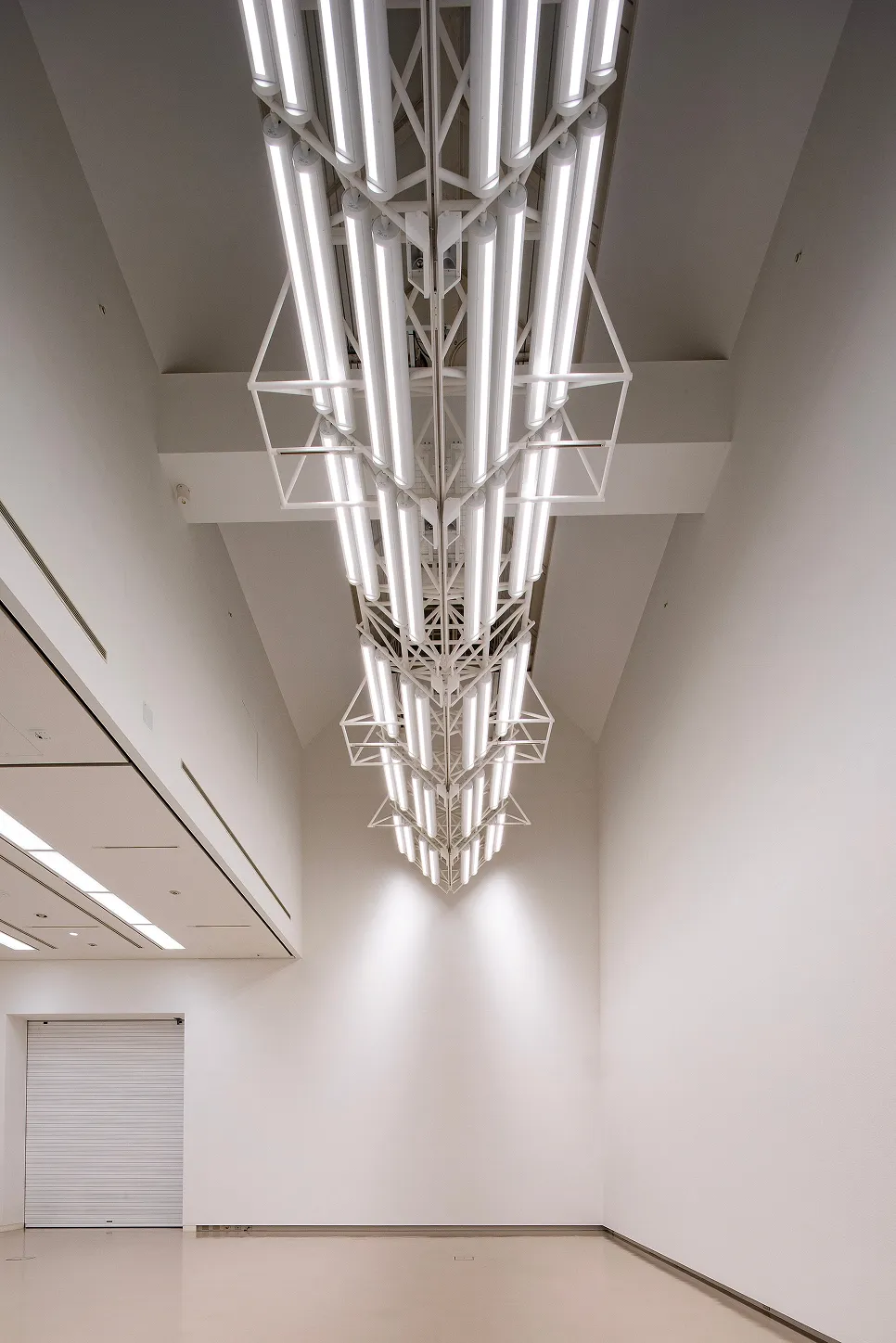
Because Exhibition Room B-1 has two ceiling surfaces of vastly differing heights, lighting systems appropriate for each side of the ceiling have been installed. For lighting on the lower side, downlights have been used as general lighting, while wall washers have been used as recessed base lighting to illuminate the walls. On the higher side of the ceiling, truss-type lighting fixtures have been installed. These lights have a rotating structure that enables adjustment of the light direction, and they are responsible for distributing light onto the floor and for illuminating wall exhibits. Furthermore, the Multi-Manager-Ex dimming and color adjustment system has been installed and includes a function for the dimming and color adjustment of individual lights that can be operated and controlled via tablet. Combining light sources that distribute light upwards and downwards to illuminate in different directions has realized uniform illumination of the walls and eliminates shadows from the trusses.
Combining direct illumination and reflector systems to achieve balanced wall surfaces
For the LED lighting, two separate systems are employed: the direct illumination system and the reflector system from the fluorescent lighting era. This design is rarely seen anywhere else in Japan. The reflector system shines just the right amount of light onto the exhibited works by using specular reflectors designed ourselves. Moreover, the optimal light color for each work of art can be selected thanks to the use of high-color-rendering/dimming/color-adjustment LED devised specifically for art museum use.
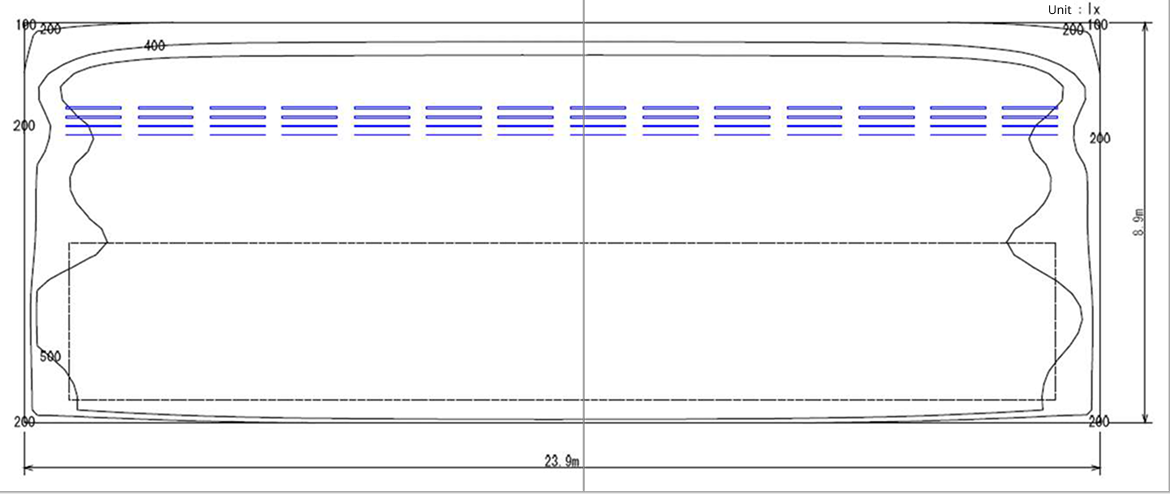
About G1: Shows the degree of uniformity of illuminance as a numerical value that expresses the uniformity of illuminance by dividing the minimum illuminance by the average illuminance.
About G2: Shows the degree of uniformity of illuminance as a numerical value that expresses the uniformity of illuminance by dividing the minimum illuminance by the maximum illuminance.
 |
|
|
|---|---|---|
| Fixture part number | Custom-made display case lighting | Custom-made display case lighting |
| Lamp | LED*1 | LED*1 |
| Total luminous flux | 2823 lm | 3192 lm |
| Maintenance factor | 1 | 1 |
| Power cord | #K0153296 | #K0153297 |
| Mounting height | 6.8~7 m | 6.4~6.6 m |
| Number of lights installed | 28 | 28 |
 |
 |
|
|---|---|---|
| Area | Overall | Exhibit area |
| Average illuminance | 583 lx | 637 lx |
| Minimum illuminance | 81 lx | 474 lx |
| Maximum illuminance | 774 lx | 714 lx |
| G1 (Minimum/Average) | 0.139 | 0.744 |
| G2 (Minimum/Maximum) | 0.105 | 0.664 |
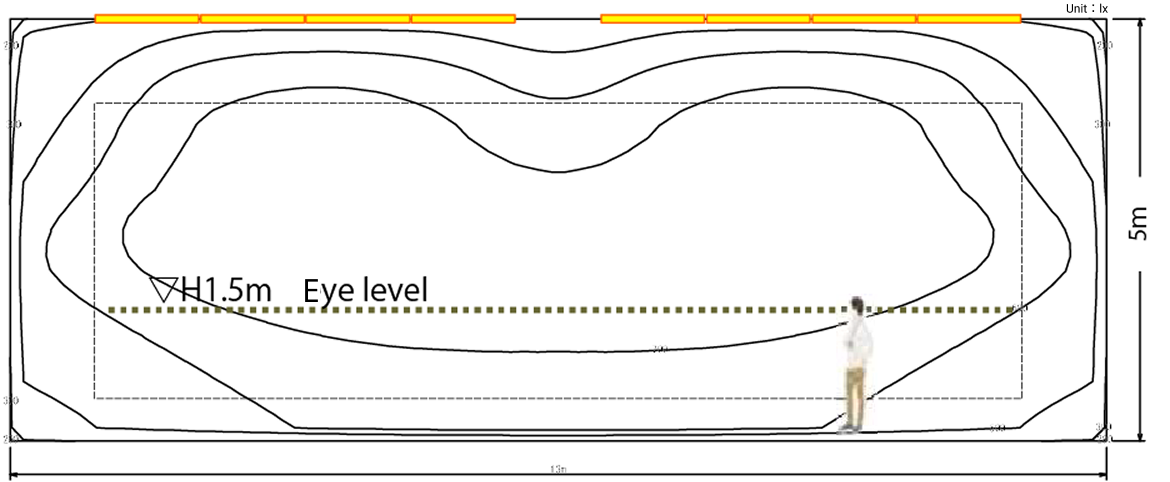
Design criteria: Lighting is designed so that the G2 (Minimum/Maximum illuminance) for the exhibit area is 0.6 or higher.
 |
|
|---|---|
| Fixture part number | XLX497NTNT-LE9 |
| Fixture type | Integrated LED iD Industrial High Bay Lighting Fixture |
| Lamp | LED5000_85_14080 |
| Total luminous flux | 7600 lm |
| Maintenance factor | 1 |
| Power cord | K0139168 |
| Mounting height | 5 m |
| Number of lights installed | 8 |
|
|
|
|---|---|---|
| Area | Overall | Exhibit area |
| Average illuminance | 651 lx | 731 lx |
| Minimum illuminance | 125 lx | 531 lx |
| Maximum illuminance | 875 lx | 875 lx |
| G1 (Minimum/Average) | 0.192 | 0.726 |
| G2 (Minimum/Maximum) | 0.143 | 0.606 |
Exhibition Room A-1: A uniformly beautiful luminous ceiling with no unevenness of light
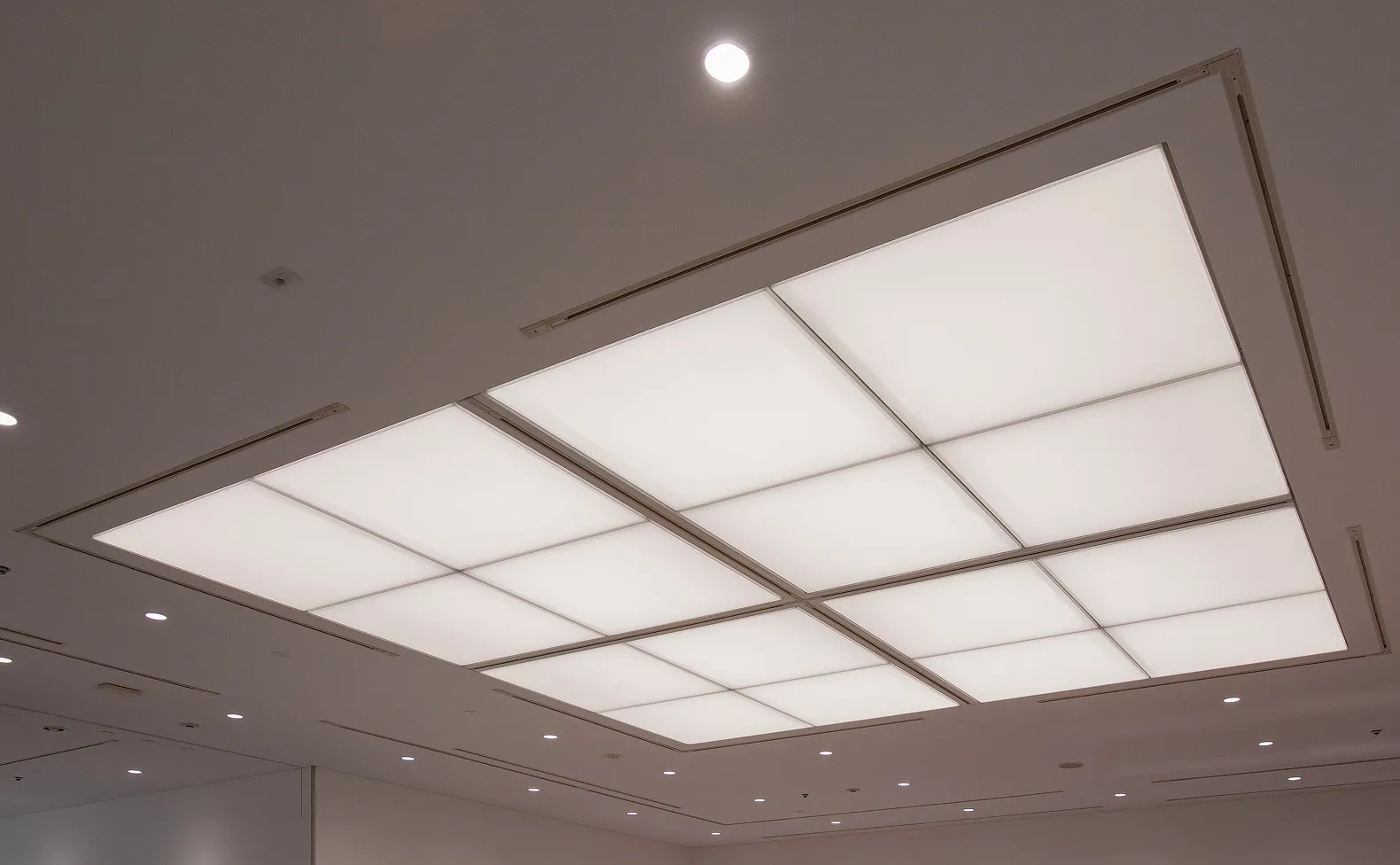
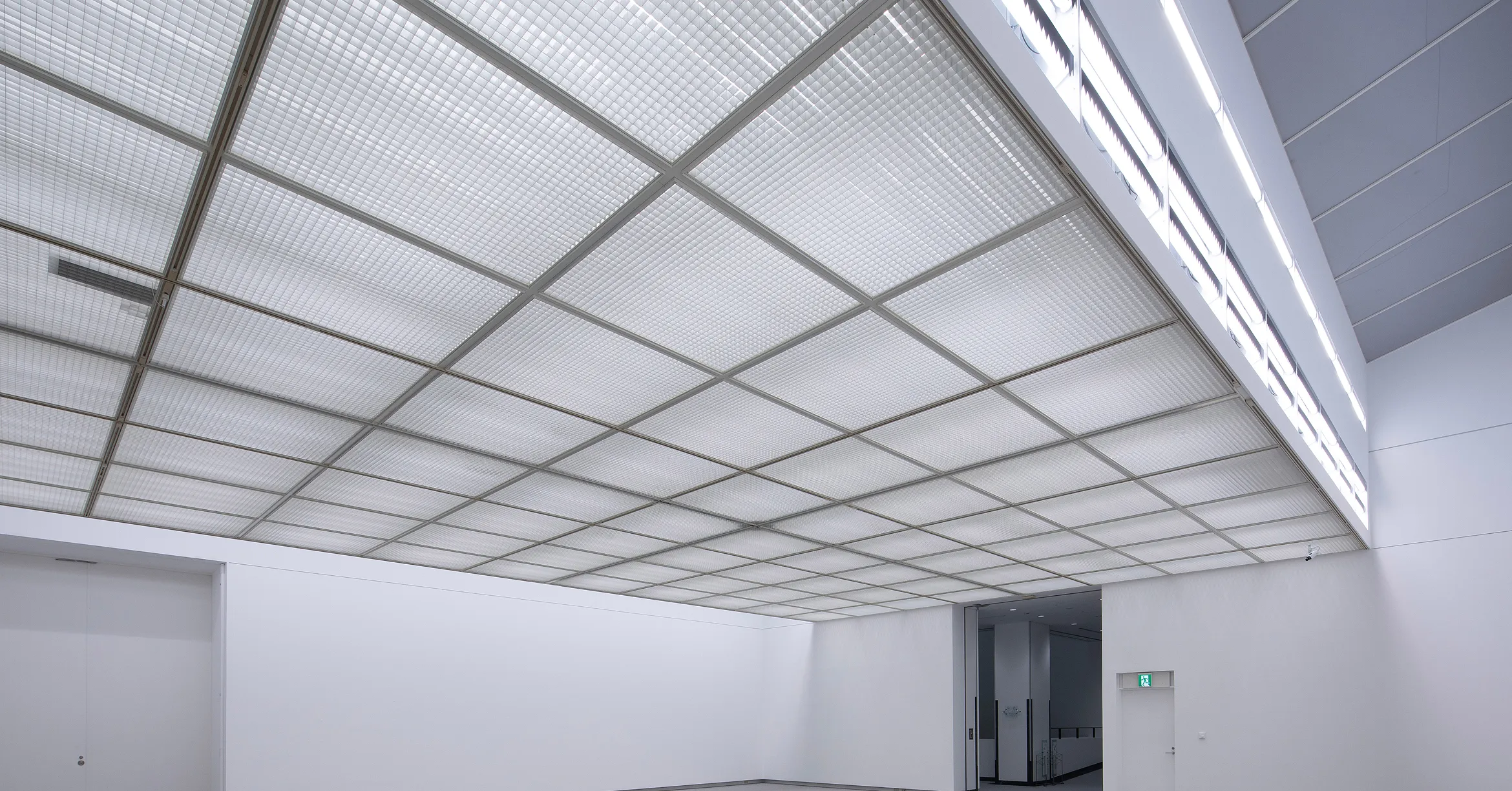
This exhibition room is where the ceiling design differs the most from the pre-renovation ceiling. Transforming the original coved ceiling into a luminous ceiling made it possible to illuminate the entire space uniformly. Creative measures have been implemented to prevent the image of lamps with the room internally illuminated using surface-mounted base lights installed inside giving careful attention to the distances between panel surfaces and lights. Dimmable and color-adjustable light bars have been used so that the space can be easily adapted to the ambiance of a diversity of special exhibitions.
Exhibition Room A-2: A space where light streams down from the ceiling while louvers conceal the presence of the lighting fixtures
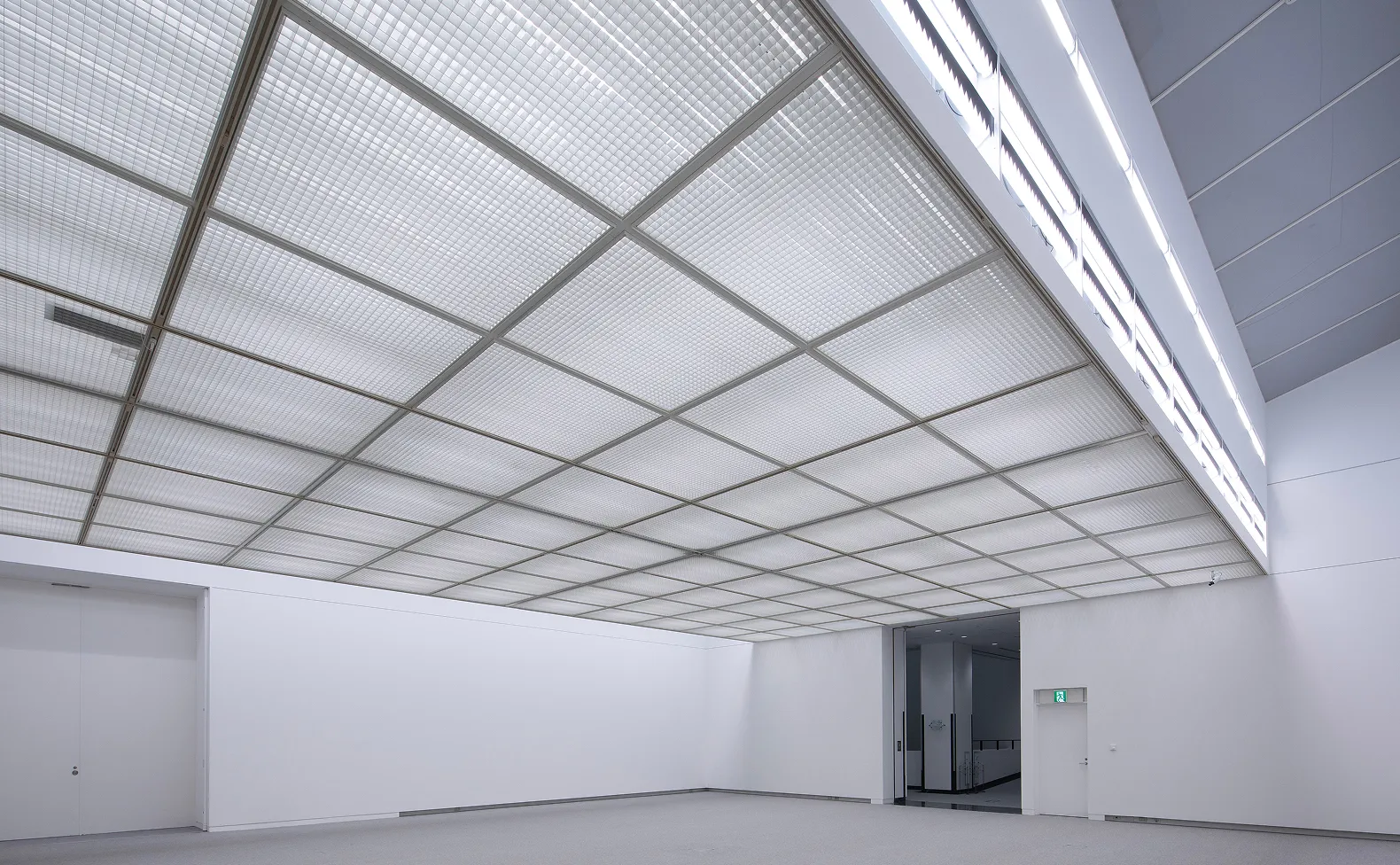
In this unique exhibition room, the entire ceiling is covered in louver lights that give the appearance of light streaming down from the ceiling. Before the restoration, white fluorescent lights (4,200 K) were used together with Halogen bulbs (2,800 K); however, we changed the color temperature to between 2,700 K and 5,000 K in order to complement different artworks by using dimmable and color-adjustable LED lighting fixtures. Because each lighting fixture could be controlled individually, the room’s lighting can be adjusted to accommodate a variety of different uses. Two-light and one-light wall washers were installed vertically along a total of three lighting source levels. The light direction of each lighting fixture was successfully adjusted to ensure uniform brightness. Here, too, each of the lights can be controlled individually, making it possible to create different lighting environments for each work of art.
B1 Floor
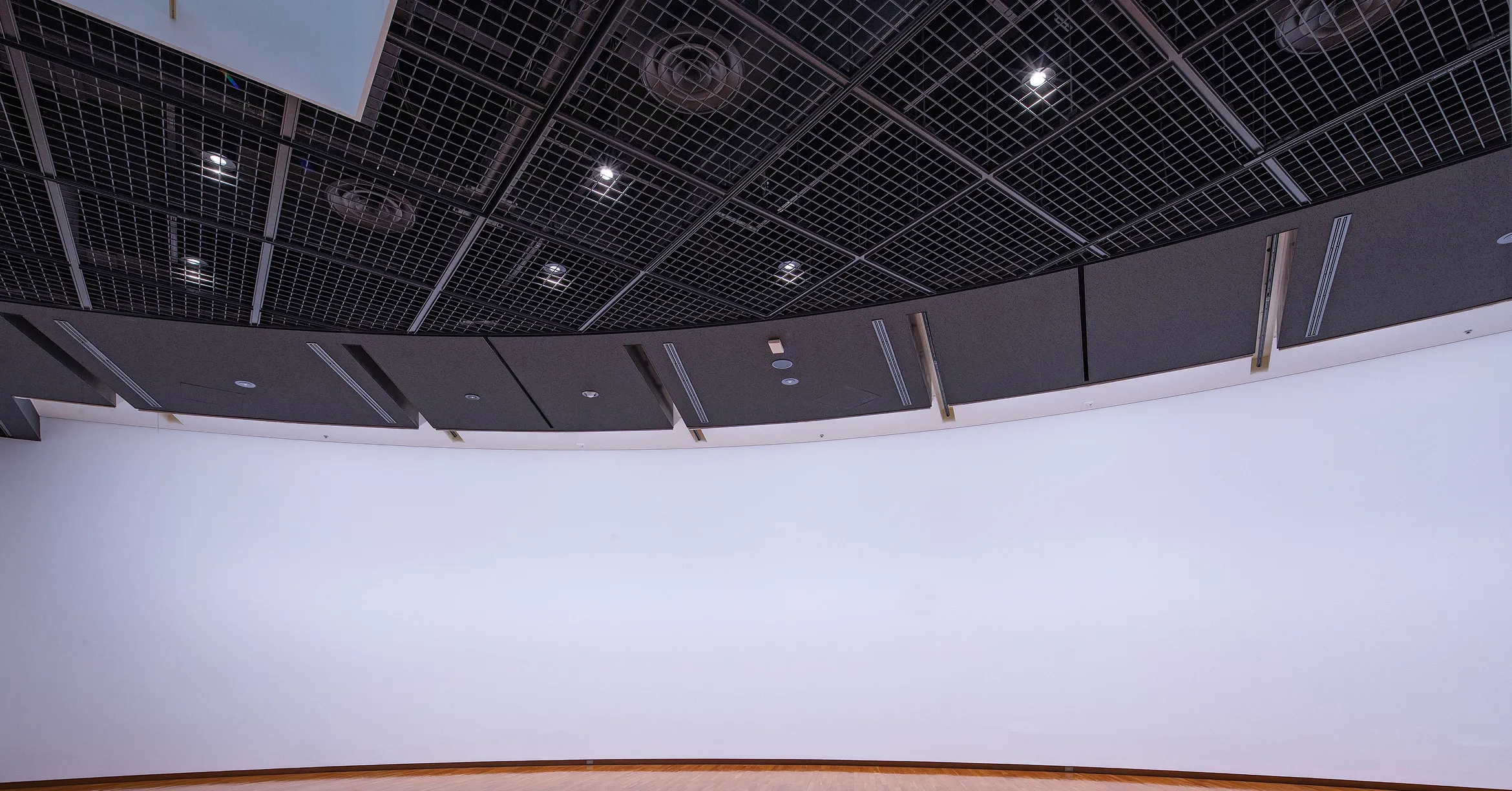
Exhibition Room A-3: Lighting which illuminates uniformly illuminates the surface of the semicircular wall, emphasizing the exhibition room’s uniqueness
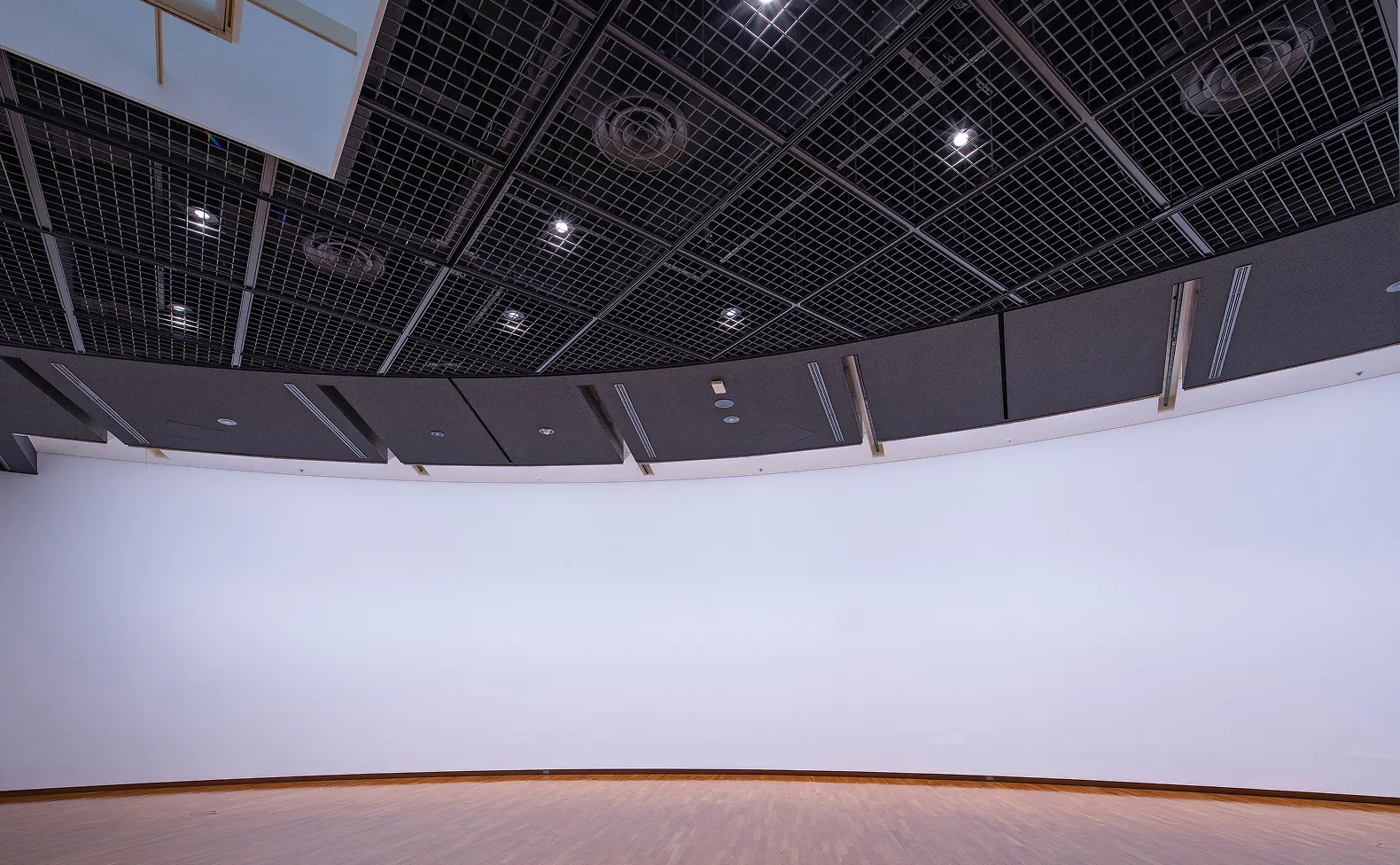
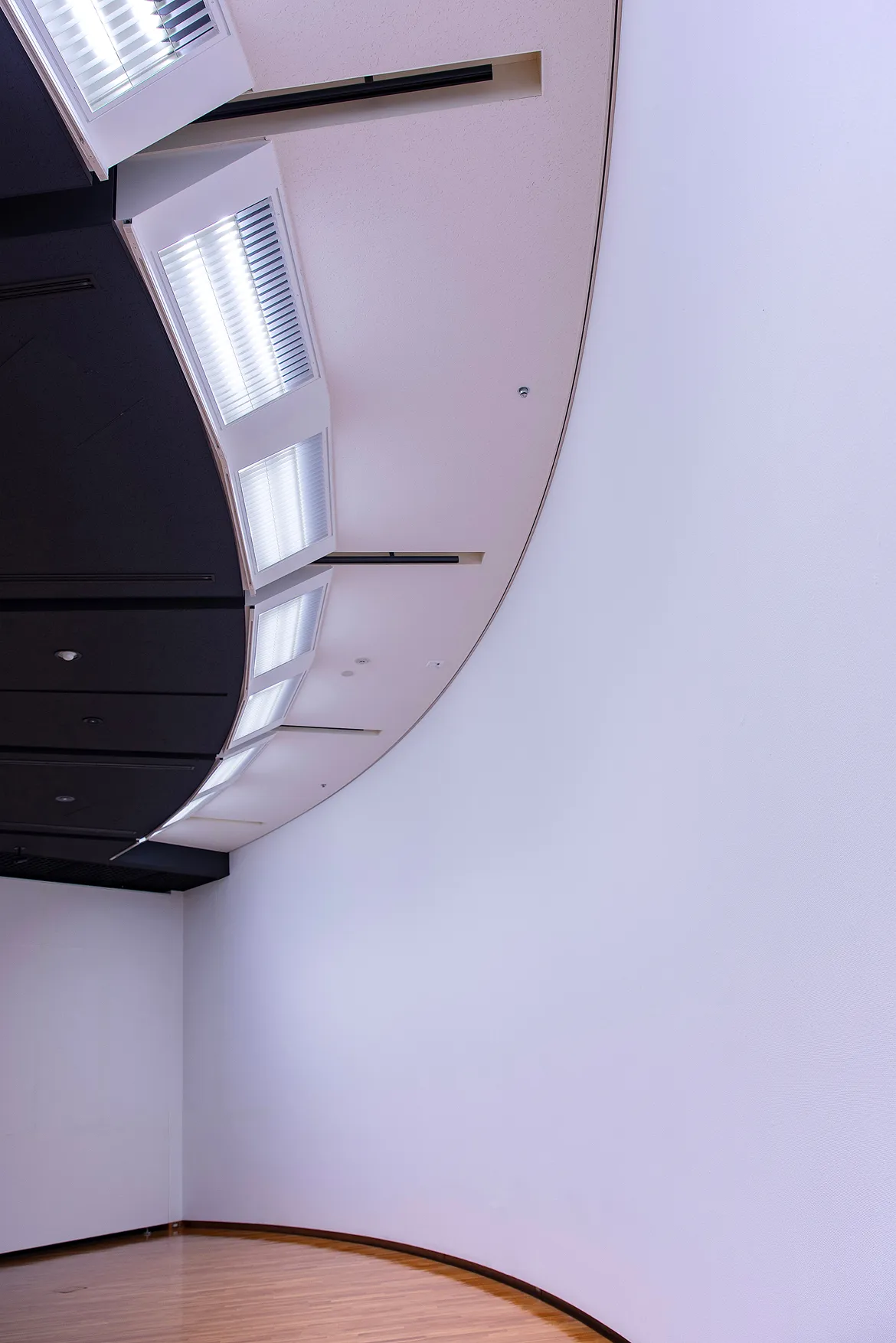
This unique space is characterized by wall washer lighting that illuminates the curved wall and the studio-style ceiling. The wall washer lighting fixtures each have two light sources, and uniform brightness is achieved through a combination of the angle of each light source and light-blurring buffers. In addition, the lighting fixtures have been positioned to ensure that the pitch between light sources is even and that prevents uneven light horizontally. Optimal light source positioning and angles were determined through repeated testing. Care has been taken to ensure the inconspicuousness of the lighting fixtures by using black surface-mounted downlights inside the ceiling louvers.
|
|
|
|---|---|---|
| Area | Overall | Exhibit area |
| Average illuminance | 504 lx | 553 lx |
| Minimum illuminance | 128 lx | 289 lx |
| Maximum illuminance | 746 lx | 746 lx |
| G1 (Minimum/Average) | 0.255 | 0.523 |
| G2 (Minimum/Maximum) | 0.172 | 0.388 |
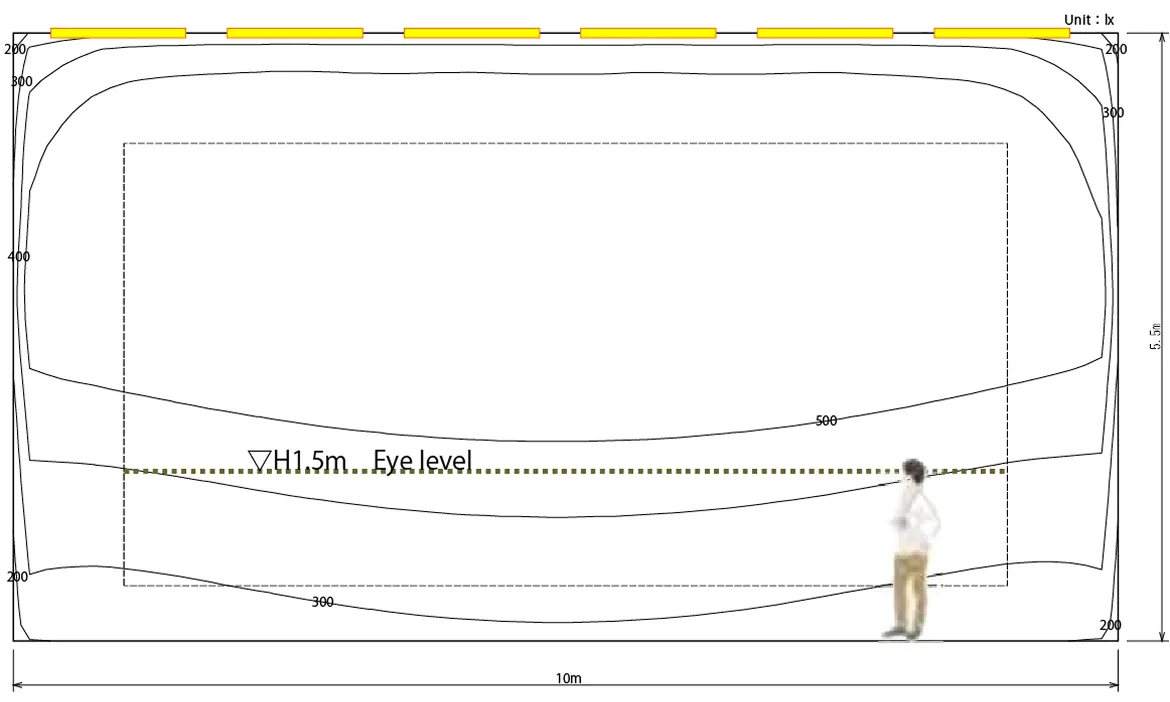
Repeated simulations were conducted to work out how linear light fixtures could uniformly illuminate a curved space. As with Exhibition Room A4, the uniformity of the exhibit area was set at 0.5 or higher. Lighting sources with higher power than for the simulations were used on-site. Controlling the dimming rate allows adjustment of the brightness of the upper and lower parts of the wall surface for an environment that can accommodate even broader displays and a wide variety of exhibit items.
Exhibition Room A-4: An exhibition room illuminated evenly by wall washers on both sides
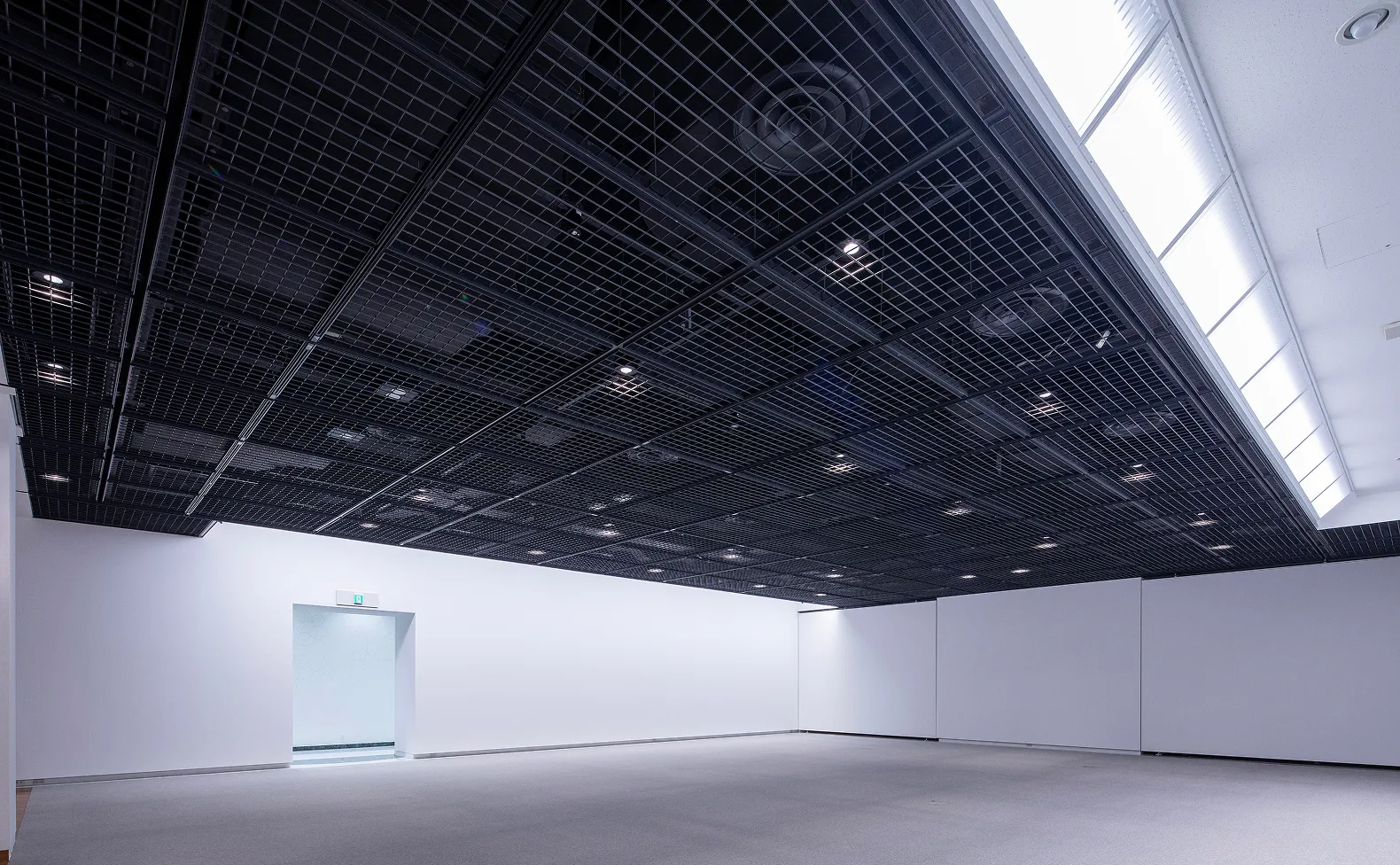
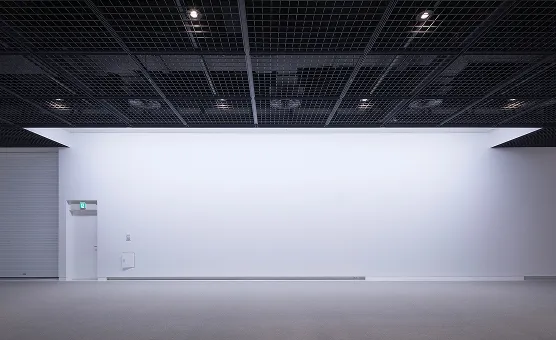
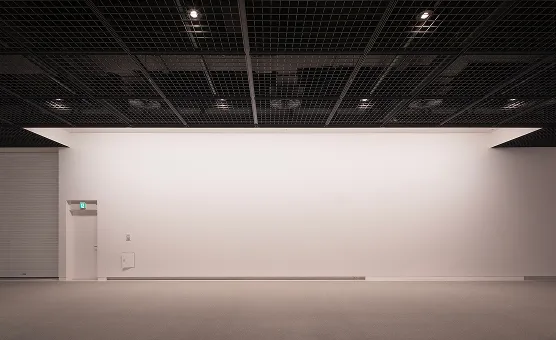
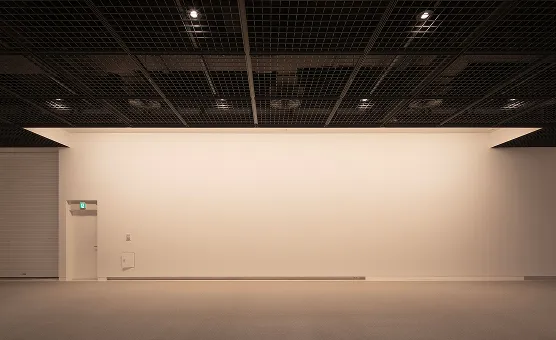
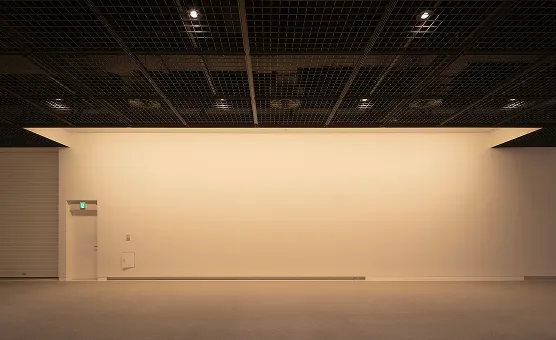
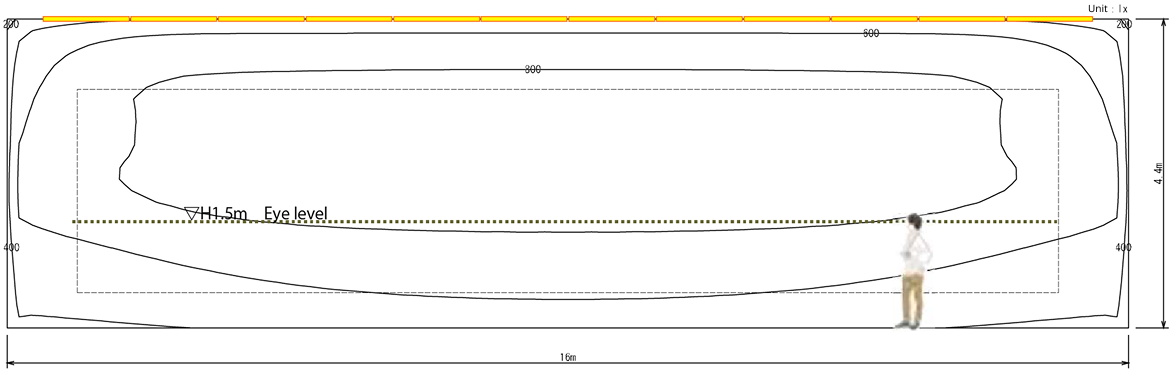
The wall surface is illuminated by wall washer lights, while the ceiling lights are custom-made built-in downlights. With regard to the type of Pulse Width Modulation (PWM) dimming for light bulb color, the light can be dimmed using a tablet terminal in the same way as with other dimming and color adjustment fixture, and dimming can be set at between 1% and 100%. Dimming the lights to the same ratio levels as before the renovation accomplished the creation of a dark atmosphere as well.
|
|
|
|---|---|---|
| Area | Overall | Exhibit area |
| Average illuminance | 714 lx | 795 lx |
| Minimum illuminance | 140 lx | 489 lx |
| Maximum illuminance | 931 lx | 931 lx |
| G1 (Minimum/Average) | 0.195 | 0.615 |
| G2 (Minimum/Maximum) | 0.150 | 0.525 |
In the illumination simulations, uniformity of illuminance in the exhibit area was set at 0.5 or higher while securing 500 lx at eye-level.
Exhibition Room B-2: Creating an exhibition room where the space surrounding a column is evenly illuminated, and visitors can immerse themselves in viewing the artwork
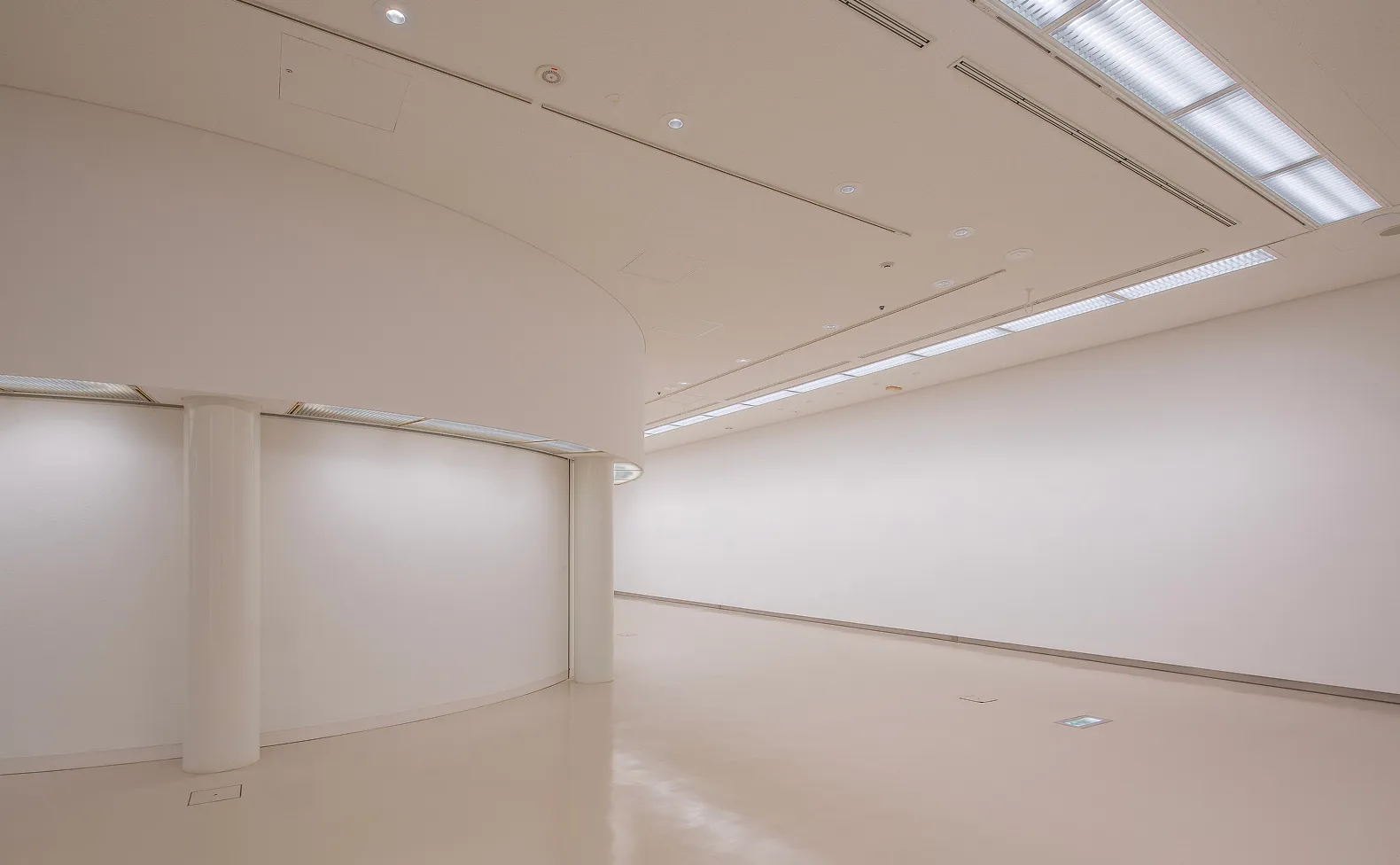
This uniquely shaped exhibition room features a circular wall surface in the center. Lighting this surface meant installing fixtures very close to the wall, so curved fixtures following the line of this circle were used. Because there is virtually no distance between the wall surface and the lighting, there were concerns that the upper part of the wall would be illuminated too brightly. To resolve this problem, extremely long buffers were used inside the lighting fixtures, which significantly reduced light distribution to the upper part of the wall. This measure increased the uniformity of illuminance more than the existing lighting, which meant the color of the light could be adjusted by dimming and color adjustment. We were conscious of creating an exhibition space that could be conveniently used by further enhancing the uniformity of illuminance while at the same time emphasizing the existing building design.
Hiroshima City Museum of Contemporary Art
- Location
- 1-1 Hijiyama-Koen, Minami-ku, Hiroshima City, Hiroshima Prefecture
- Owner
- Hiroshima City
- Design
- Kisho Kurokawa Architects & Associates
K Structural Research Institute
- Construction
- Shimizu–Kyoritsu Construction Joint Venture
- Electrical Work
- Kinden Corporation
- Completed
- March 1, 2023

