Illuminance angle
The illuminance angle is an indicator of the spread of light (opening angle) to the position where the illuminance is one-half (50%) of the illuminance directly below the lighting fixture (central line) (horizontal illuminance). Beam angle expresses the spread of the light, but this indicator is based on the angle when the luminous intensity (unit: cd) is half (50%). In contrast, the illuminance angle is based on the illuminance of the horizontal plane.
*Illuminance: The brightness indicator showing how much light is being delivered to a certain place.
The unit of measure is the lux (lx).
Illuminance angle basic concept
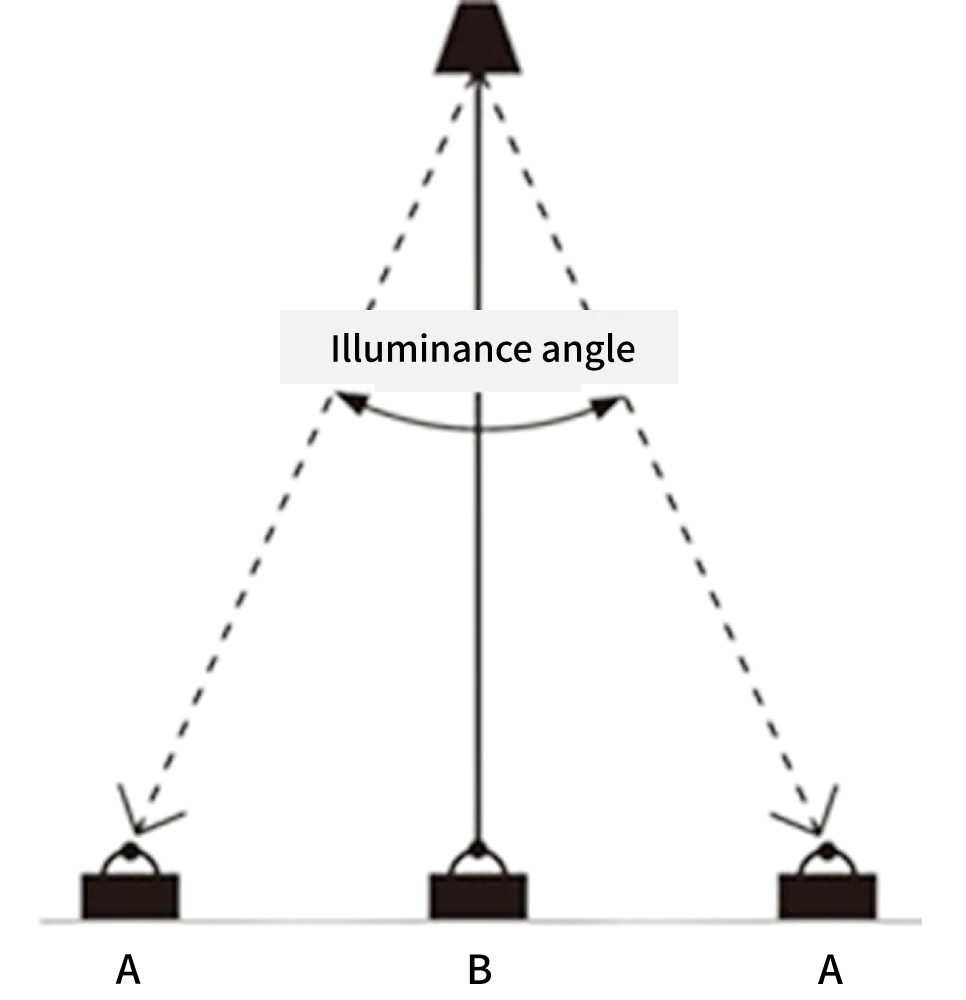
- A: Horizontal illuminance that is one-half of the horizontal illuminance directly below the lighting fixture
- B: Horizontal illuminance directly below the lighting fixture
- The illuminance directly below the lighting fixture (central line) is the highest level of illuminance (horizontal illuminance)
- The further the distance from directly below the lighting fixture, the more the light diffuses, and the brightness gradually decreases.
- The sum of the angles formed by connecting the points on the left and right sides where the illuminance drops to one-half (50%) of the value directly beneath the source.
From the illuminance angle, it is possible to determine the range where sufficient light is being delivered by the lighting fixture. Using the angle (illuminance angle) at the position where brightness decreases by one-half (50%), it is possible to determine in advance the type of lighting fixture that will ensure the required illuminance.