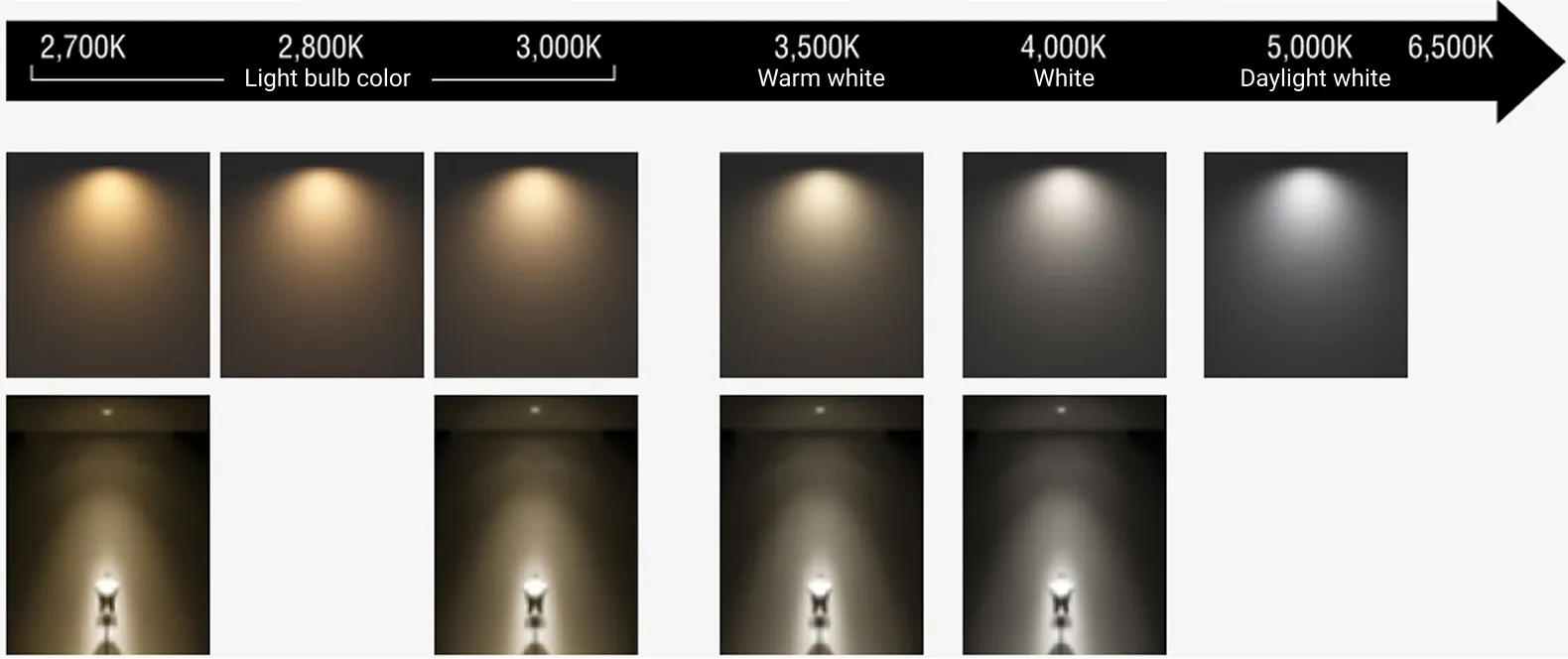
Color temperature
Color temperature is expressed in units of kelvin (K). The lower the color temperature, the more reddish the light color appears, while the higher the color temperature, the more bluish the light color appears. For example, daytime light on a sunny day has a high color temperature and appears almost white. If the color temperature rises even further to 7,000 K or above, the light starts to take on a bluish tinge. Conversely, the color temperature is low just after sunrise or before sunset, so the light starts to take on a reddish tinge when the color temperature drops to 2300 K or below. Color temperature highs and lows affect thermal sensation (warm/cool image) and influence the ambience of a space. However, we need to carefully note that differences in color temperature have no relation to whether a color looks good or bad. That is to say, a light source with a low, reddish temperature does not necessarily give red objects a beautiful appearance.