

Differences between the units of brightness: lux (lx), lumens (lm), and candela (cd)
In general, brightness is a psychological concept in response to attributes of visual perception of the luminance of the surface of an object or a light source as generated by the amount of light and is interpreted and experienced differently by different people. However, the following are representative indicators that are used as a means of measuring brightness using physical units.
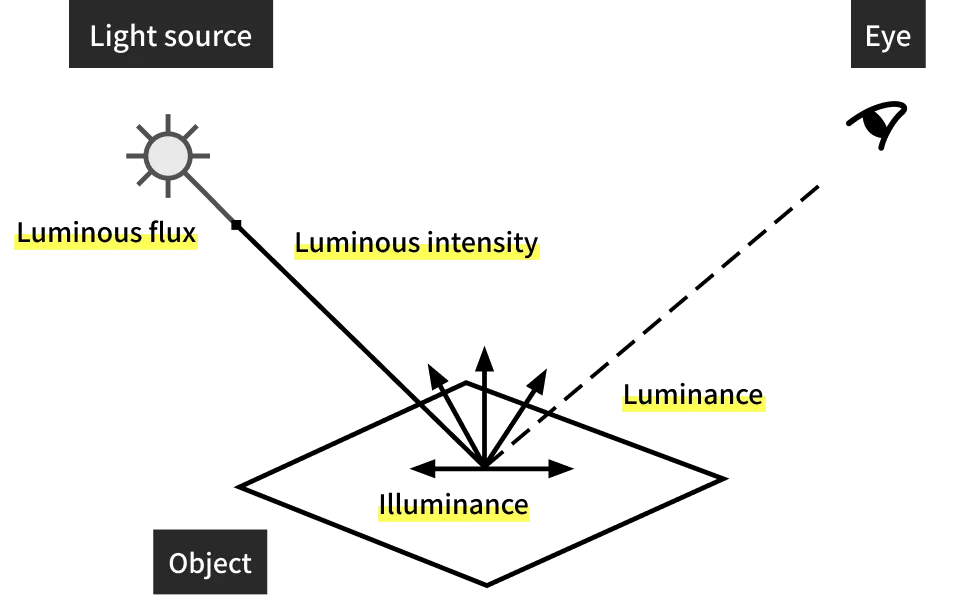
- Luminous flux: lumen (lm)
This unit of measure expresses the amount of total light (luminous flux) emitted by a lighting fixture (light source). The lumen (lm) is used to show the total luminous flux in the specifications of many LED lighting fixtures and lamps. Luminous flux is the total amount of light emitted from an object, such as a light bulb or light fixture that radiates light (light source). The unit of measure for luminous flux is the lumen (lm); the higher the lumen value, the larger the amount of light, and so the brightness increases. By checking the lumen value for many LED lighting fixtures and lamps, it is possible to select products with the appropriate brightness. - Illuminance: lux (lx)
This unit of measure is for illuminance and expresses how much light is being directed onto a place that is being illuminated. It indicates the brightness of the surface receiving the light. Lux has been established as the standard for illuminance for each type of place and work activity. - Luminous intensity: candela (cd)
This unit of measure expresses the strength or intensity of the light (luminous intensity) at a certain angle when a person looks at the lighting fixture or lamp (light source). The terms used include central luminous intensity and maximum luminous intensity. Furthermore, the degree of brightness of a lighting fixture or lamp when seen from a certain angle or direction is called “luminance” and is expressed in cd/m2.

